
Escalation of US-Iran Relations: Analysis
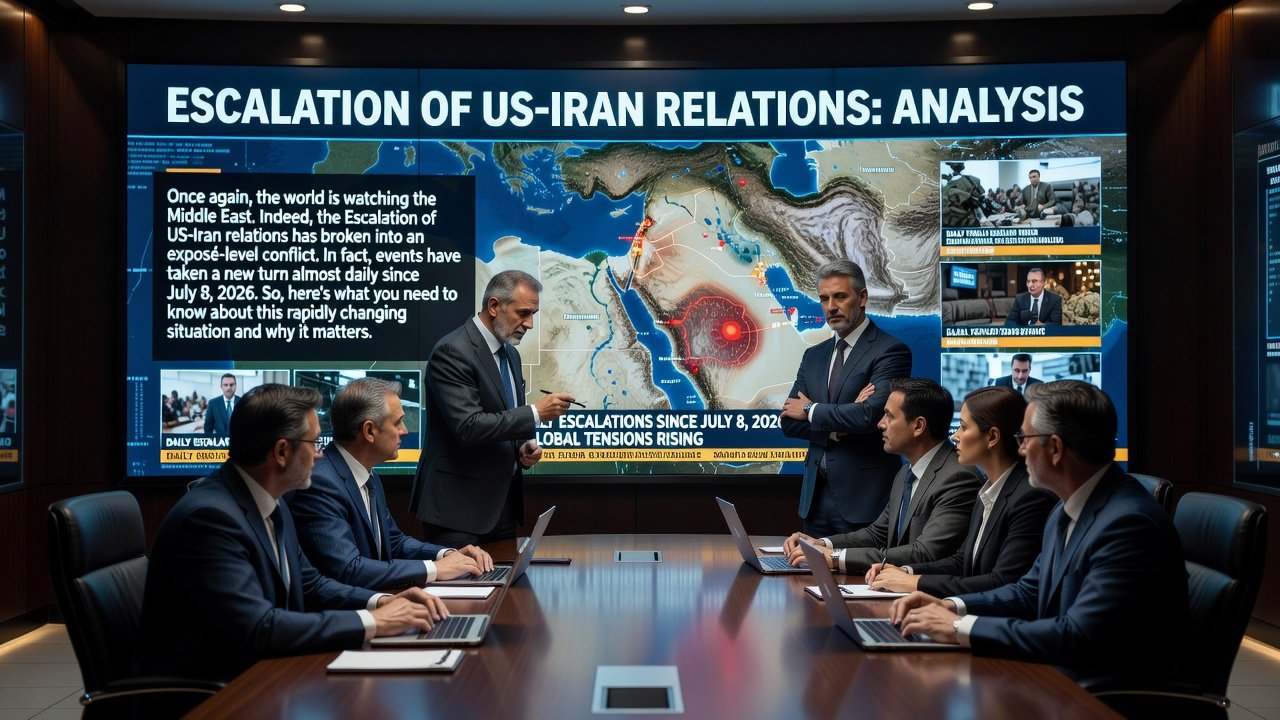
Once again, the world is watching the Middle East. Indeed, the Escalation of US-Iran relations has broken into an exposé-level conflict. In fact, events have taken a new turn almost daily since July 8, 2026. So, here’s what you need to know about this rapidly changing situation and why it matters.
Escalation of US-Iran Recent Developments
According to US reports, a large-scale, multi-target strike was carried out by American forces. Specifically, officials say the strike was retaliation for incidents involving commercial vessels in the Strait of Hormuz, a crucial route in the global oil trade. As a result, this latest chapter in the Escalation of US-Iran tensions has drawn attention from governments and markets alike.
Meanwhile, footage and reports from international media outlets surfaced in recent days. Notably, they appear to show disruption at Kharg Island and activity surrounding Bandar Abbas. If accurate, these disruptions could hurt the Iranian economy in the near future.
Recent Context of Escalation of US-Iran
First of all, this isn’t a standalone incident. Rather, it has occurred at the same time as the NATO leaders’ meeting in Ankara, Turkey, for their annual summit. As a result, the overlap has produced two very large, concurrent global news stories, and the Escalation of US-Iran relations sits at the center of one of them.
Previously, an informal agreement kept tensions at a simmering level. However, that fragile equilibrium may not last much longer. Indeed, continued fighting in the region could soon break the fragile status quo entirely.
The Economic Angle: Oil Sanctions
In addition, the US has now restricted Iranian oil sales alongside its military posturing. Consequently, this move costs the Iranian government heavily, since oil sales help fund state operations. Likewise, the US sanctions also threaten other nations tied to Iran’s oil trade. Therefore, global shipping profits tied to that oil may collapse as a direct consequence of the Escalation of US-Iran relations.
In response, Iranian officials have criticized the renewed US oil sanctions strongly. Specifically, they claim the sanctions breach an understanding both countries reached just one month prior. Furthermore, Iran’s Foreign Ministry blames the US for abandoning the agreement’s terms, a claim that adds another layer to the ongoing Escalation of US-Iran dispute.
How Iran Has Responded
For instance, Iranian officials have signaled that a response is imminent. Additionally, they frame this response as a necessary reply to what they call an unprovoked escalation. So far, however, no one in the region has called for de-escalation.
Meanwhile, analysts are now watching Iran’s moves around energy infrastructure closely. Because disruptions to commercial shipping could hit international markets almost immediately, this remains a major concern. That’s why the Strait of Hormuz remains one of the most closely watched waterways in the world amid the ongoing Escalation of US-Iran tensions.
NATO Summit Developments
Overall, the Escalation of US-Iran relations has cast a long shadow over this year’s NATO summit. As a result, it’s shaping conversations well beyond the alliance’s usual agenda.
Day 1: What’s Happening at the President Trump NATO Summit
Currently, President Trump is attending the NATO Summit in Ankara. There, Turkish President Recep Tayyip Erdogan is hosting him. Meanwhile, NATO alliance members reportedly feel uneasy about conditions in both the European and Middle Eastern theaters. Consequently, countries in the alliance are now demanding clearer commitments from the United States as the Escalation of US-Iran situation continues to unfold.
In response, Defense Secretary Pete Hegseth plans to leave the president’s delegation to handle the situation directly. Because of this, the North Atlantic Council has classified this situation as high priority. Now, council meetings treat the Iran situation as a top item on the agenda.
Day 2: What Might Happen After Escalation of US-Iran
On one hand, continued escalation remains a real possibility. This could draw other regional players into the conflict and, in turn, worsen pressure on the global fuel supply. On the other hand, both sides could limit further moves and avoid a wider conflict, thereby easing the Escalation of US-Iran relations before it spreads further.
Over the coming days, you may notice erratic movement in markets and fuel prices. Therefore, consider adjusting travel plans if fuel prices or market shifts start to affect your routes.
Staying Updated
Since this situation evolves day by day, it’s best to rely on multiple credible news sources instead of just one. Meanwhile, both governments continue to release official statements, and more information will emerge as the days go on. So, watch closely, since the Escalation of US-Iran story continues to develop in real time.
Final Thoughts
In summary, recent events show that the Escalation of US-Iran relations has reached a new crisis point, one of growing concern in modern history. Altogether, renewed sanctions, increased military activity, and increasingly aggressive statements from both nations all point to a tense road ahead. Ultimately, we’ll update this page as new, confirmed developments occur in the weeks ahead.
