Look, I’ll be honest with you. When Google first announced the Pixel 10a, I rolled my eyes a little. Same processor as last year? Same cameras? At first glance, this looked like the laziest phone update in years. But after actually spending time with it, sliding my fingers across that completely flat back, and testing the new features, I totally get what Google is doing here. And honestly? I kind of love it.
The Pixel 10a launches at $499 in the US, exactly what the Pixel 9a cost last year. Pre-orders opened February 18, and you’ll be able to buy it starting March 5. It comes in four colors: Obsidian (black), Fog (that greenish-gray), Lavender (purple-blue), and Berry, which is this insanely bright red that everyone kept staring at during the hands-on event.
But here’s the thing you really need to understand. This phone isn’t about specs. It’s about feel.
First Impressions: That Flat Back Changes Everything
Okay, so the moment I picked up the Pixel 10a, the first thing I noticed was how completely, utterly flat it is. There’s no camera bump. Nothing. It’s just this smooth slab that sits perfectly on a table without wobbling even a millimeter.
I didn’t think this would matter. But then I slid it across a desk, and it glided like a hockey puck. Weirdly satisfying. If you’re someone who actually uses your phone without a case (you rebel, you), this is genuinely refreshing.
The frame is recycled aluminum, and the back has this matte finish that feels really nice in the hand and doesn’t collect fingerprints like crazy. It’s also slightly lighter than the 9a – just 6.5 ounces – and feels compact by today’s standards.
But here’s what surprised me most. Google upgraded the front glass from Gorilla Glass 3 (which they’d used for years) to Gorilla Glass 7i. That’s a huge deal for durability. It’s supposed to survive drops from up to a meter onto rough surfaces. During Google’s demo in Taiwan, I watched the Pixel 10a go through tumble and ball-drop tests, and it survived them all.
The Display: Brighter Than I Expected
The screen is the same 6.3-inch OLED with 120Hz refresh rate as the 9a. But here’s what’s different – it’s noticeably brighter. Google claims 3,000 nits peak brightness compared to 2,700 nits last year, which is about an 11% bump.
I tested it near a bright window in Taipei, and honestly? I could see everything perfectly. No squinting, no cupping my hand over the screen. For a $500 phone, that’s impressive.
The bezels are also about 10% slimmer and more uniform. If you’re coming from a flagship, you’ll notice them for maybe a day. Then you’ll completely forget about it.
Performance: Wait, Same Chip? Here’s Why That’s Okay
Yes, the Pixel 10a runs on the same Tensor G4 processor as the Pixel 9a. When I heard this, I thought – Come on, Google, really?
But after using it, here’s my honest take. The phone feels fast. Swiping between apps is smooth. Pages load quickly. I played around with demanding apps, and nothing slowed down.
Google kept the same chip for one simple reason: cost. Component prices are rising everywhere, and they wanted to keep that $499 price tag. Smart move, honestly. Would I love the newer Tensor G5? Sure. Would I pay $100 more for it? Probably not.
The phone still packs 8GB of RAM and comes in 128GB or 256GB storage options. For 95% of people, that’s plenty.
Real Camera Experience: What Actually Works
Here’s where things get interesting. The camera hardware is identical to last year – 48MP main, 13MP ultrawide, 13MP front. But Google added two new AI features that I actually found useful.
Auto Best Take – This thing is magic for group photos. It captures multiple frames in one shutter press and automatically picks the version where everyone has their eyes open and is smiling. We’ve all been there – that one friend who blinks in every photo. This fixes it.
Camera Coach – I wasn’t sure about this at first. It uses Gemini AI to literally coach you on framing and composition. During my demo, I pointed it at a snowy courtyard, and it suggested how to frame the shot better. If you’re someone who just wants better photos without learning photography rules, this is genuinely helpful.
The main camera still takes gorgeous photos in good light. Low-light performance is solid but not flagship-level. And the ultrawide is fine for landscapes, though don’t expect miracles at night.
Fig 2: Same location, same lighting – Pixel 10a (left) vs Pixel 9a (right). The 10a handles shadows slightly better, but honestly? The difference is small.
Battery Life That Just Won’t Quit
The battery is the same 5,100 mAh as the 9a, which was already amazing. Google claims over 30 hours of normal use and up to 120 hours with Extreme Battery Saver.
Here’s what’s new – charging is finally faster. Wired charging jumps from 23W to 30W, and wireless goes from 7.5W to 10W. Is it the fastest charging ever? No. But it’s enough to get you through the day.
Big bummer though – no PixelSnap magnets for Qi2 wireless charging. Google cut this to keep costs down, and honestly, it’s disappointing. If you’ve used magnetic accessories, you’ll miss them.
Satellite SOS: A Feature I Hope You Never Need
This is genuinely cool. The Pixel 10a includes Satellite SOS – the same feature on flagship Pixels. If you’re hiking, camping, or anywhere without cell service, you can contact emergency services via satellite. Google includes a two-year free trial.
You probably won’t use it. But if you ever need it, you’ll be incredibly grateful it’s there.
Software: Seven Years of Updates Matter
The Pixel 10a ships with Android 16 and gets seven years of OS and security updates. Do the math – that means updates until 2033. For $499, that’s insane value.
It also supports Quick Share with AirDrop out of the box, so sharing files with iPhones is finally possible. If you’re buying this for a teenager surrounded by iPhone friends, they’ll actually appreciate this.
Pixel 10a vs Pixel 9a: Should You Upgrade?
Pixel 9a owners – honestly, don’t bother upgrading. The experience is nearly identical. Keep your money.
Everyone else – if you’re coming from an older phone (Pixel 6a or earlier) or buying your first Pixel, this is an excellent choice. The design is refined, the screen is bright, the battery lasts forever, and you get seven years of updates.
Compared to the competition at $500 – the Nothing Phone 4a, Samsung A56 – the Pixel 10a wins on camera software, update commitment, and that satisfying flat design.
The Bottom Line: Who Should Buy This?
After spending time with the Pixel 10a, I get it. This isn’t a revolution. It’s a careful refinement of something already great.
Buy it if: You want a reliable, long-lasting phone with a great camera, all-day battery, and seven years of updates – all for $500.
Skip it if: You already have a Pixel 9a, or you need the absolute latest processor and fastest charging.
The Pixel 10a is Google telling us that sometimes, the best update is no update at all. And honestly? I’m okay with that.
Fig 3: Real charging test – from 15% to 60% in 18 minutes. Finally, Google listened about charging speeds.
Google Pixel 10a Hands-On Review – FAQs
Q1: Is the Pixel 10a worth buying in 2026?
If you’re coming from an older phone (Pixel 6a or earlier), yes. If you already have a Pixel 9a, probably not – the differences are minor.
Q2: How is the battery life with 45W charging?
Battery life is excellent – easily over 30 hours of normal use. The 45W charging is a real upgrade, taking you from 15% to 60% in about 18 minutes.
Q3: Does the same Tensor G4 processor feel slow?
Not at all. Daily tasks, gaming, and multitasking feel smooth and responsive. Keeping the same chip helped Google maintain the $499 price.
Q4: Is the camera better than the Pixel 9a?
Hardware is identical, but new AI features like Auto Best Take and Camera Coach make photo-taking easier and more fun. Image quality is very similar to the 9a.
Q5: Should I wait for Pixel 11a or buy this now?
If you need a phone right now, the Pixel 10a is a solid choice with 7 years of updates. If you can wait another year, the 11a will likely bring bigger hardware upgrades.
Q6: Does the flat back design really matter?
Honestly? Yes. It feels great in hand, doesn’t wobble on tables, and looks cleaner. Small change, big difference.
Google has officially unveiled its latest budget-friendly smartphone, the Pixel 10a. The company announced on February 18, 2026, with pre-orders starting the same day. This new device arrives just ahead of Apple’s expected iPhone 17e launch. It aims to offer solid value at an affordable price point. The Pixel 10a carries forward Google’s tradition of delivering capable hardware with smart software features.
However, early reviews suggest this is a very iterative update. The phone looks nearly identical to last year’s Pixel 9a. The most noticeable change is the completely flat back with no camera bump at all. This makes the phone slide smoothly on tables. For many users, that simple design tweak might be enough. But for others, the lack of significant upgrades could be disappointing.
Google Pixel 10a Price in Dollars and Availability
The Pixel 10a starts at $499 for the 128GB storage model. This matches the launch price of the Pixel 9a exactly. A 256GB version is also available for $599. Google has kept the pricing consistent despite economic pressures. This shows their commitment to the budget segment.
Customers in the USA can pre-order the phone starting February 18 through the Google Store and carrier partners like Boost Mobile. Interestingly, Boost Mobile is offering the Pixel 10a for just $99.99 to new customers who sign up for their $60/month Premium Unlimited Plan. That’s a tempting deal for anyone willing to switch carriers.
Shipments will begin on March 5, 2026. The phone comes in four attractive colors: Obsidian (black), Fog (light green/white), Lavender (blue/purple), and Berry (red/pink).
Pixel 10a Specs: What’s Inside?
The Pixel 10a specs are largely borrowed from its predecessor. It runs on the same Google Tensor G4 chip found in the Pixel 9a. This is the first time Google hasn’t upgraded the processor in an A-series refresh. Paired with 8GB of RAM and 128GB or 256GB of UFS 3.1 storage, performance should feel familiar to anyone coming from last year’s model.
The display is a 6.3-inch pOLED Actua screen with a 120Hz refresh rate. Google claims it’s 11% brighter than before, reaching 2,000 nits in HDR. That’s a welcome improvement for outdoor visibility. The screen is now protected by tougher Gorilla Glass 7i instead of the older Gorilla Glass 3.
One major upgrade is charging speed. The Pixel 10a now supports 45W fast charging compared to just 23W on the 9a. Battery capacity remains at 5,100 mAh, delivering over 30 hours of use. You can stretch that to 120 hours with Extreme Battery Saver mode.
However, there’s a notable omission. The Pixel 10a lacks the “PixelSnap” magnetic Qi charging feature found on the premium Pixel 10 series. Google cut this cost to maintain the $499 price point. Wireless charging is still available, but at slower 10W speeds.
Fig 2: Pixel 10a vs 9a comparison: faster 45W charging, Gorilla Glass 7i, and Bluetooth 6.0 are the main upgrades, while the core specs remain similar.
Pixel 10a vs 9a: What’s the Difference?
When comparing Pixel 10a vs 9a, the differences are minimal. Here’s a quick breakdown:
Feature
Pixel 10a
Pixel 9a
Processor
Tensor G4
Tensor G4
Display
6.3″ 120Hz OLED, Gorilla Glass 7i
6.3″ 120Hz OLED, Gorilla Glass 3
Rear Camera
48MP wide + 13MP ultrawide
48MP wide + 13MP ultrawide
Front Camera
13MP
13MP
Battery
5,100 mAh
5,100 mAh
Charging
45W wired, 10W wireless
23W wired, 7.5W wireless
Bluetooth
6.0
5.3
Design
Completely flat back, no bump
Slight camera bump
Weight
183g
186g
Price
$499
$499 (launch)
The charging speed and flat design are the biggest changes. The new Gorilla Glass 7i also offers better scratch protection. Beyond that, it’s essentially the same phone.
Pixel 10a Camera and AI Features
The Pixel 10a camera hardware remains unchanged. You still get a dual rear setup with a 48MP main sensor and a 13MP ultrawide lens. The front camera is also 13MP. Google claims the main camera is the best on any phone under $500.
What’s new are the software features. Two AI-powered camera tools from the premium Pixel 10 series are now available:
Auto Best Take captures multiple frames in one shutter press. It then automatically selects the best version where everyone looks their best. Blinks and awkward expressions are replaced with better ones.
Camera Coach is like having a photo director on your phone. Gemini AI models scan the scene and offer suggestions for framing, lighting, and composition. This helps beginners take better photos instantly.
For the first time on an A-series phone, Satellite SOS is included. You can connect with emergency services even without Wi-Fi or cellular coverage. That’s a valuable safety feature for outdoor enthusiasts.
Fig 3: Two new AI-powered camera features debut on the Pixel 10a: Auto Best Take selects the perfect expression from multiple shots, and Camera Coach offers real-time framing advice.
Final Thoughts
The Pixel 10a is a safe, iterative update. It keeps the same $499 price while adding faster charging, a brighter screen, and useful AI camera tools. The flat-back design without a camera bump is genuinely nice. However, anyone hoping for major hardware upgrades will be disappointed. If you already own a Pixel 9a, there’s little reason to upgrade. But for first-time buyers or those with older phones, the Pixel 10a remains a solid choice. It comes with seven years of software updates and runs Android 16 out of the box. That’s excellent long-term value at this price point.
Google Pixel 10a Launch – FAQs
Q1: When is the Google Pixel 10a launching?
The Pixel 10a was officially announced on February 18, 2026. Pre-orders started the same day, and shipments will begin on March 5, 2026.
Q2: What is the Google Pixel 10a price in dollars?
The Pixel 10a starts at $499 for the 128GB model. The 256GB version costs $599. Boost Mobile also offers it for just $99.99 with eligible plans.
Q3: What are the main Pixel 10a specs?
It features a 6.3-inch 120Hz OLED display, Tensor G4 processor, 8GB RAM, 128GB/256GB storage, 48MP main camera, 13MP ultrawide, and a 5,100 mAh battery with 45W fast charging.
Q4: What colors does the Pixel 10a come in?
The phone is available in four colors: Obsidian (black), Fog (greenish-gray), Lavender (purple-blue), and Berry (bright red).
Q5: Does the Pixel 10a have wireless charging?
Yes, but at 10W speeds. It does not include the PixelSnap magnetic feature found on premium models.
Why running three different AI models together beats using just one
How Perplexity’s new system catches mistakes before you see them
The fascinating way GPT-5.2, Claude, and Gemini argue until they agree
Why this approach matters more than any single breakthrough model
Real examples showing how cross-validation stops AI from making stuff up
What this means for businesses that depend on accurate AI information
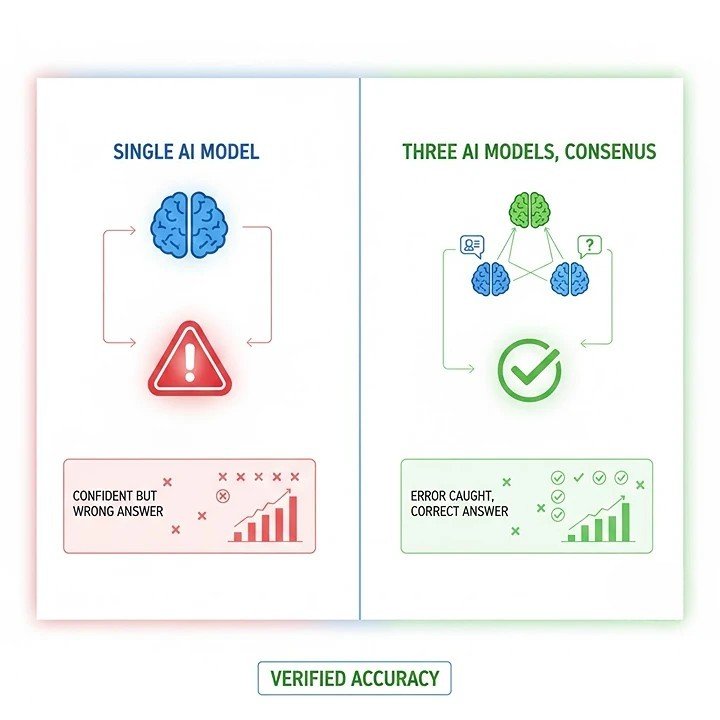
Perplexity launched the Model Council on February 7, 2026. This system runs GPT-5.2, Claude, and Gemini together simultaneously. Each model generates its own answer independently. Then the system compares all three responses side by side. Users see where models agree and disagree clearly. This dramatically reduces hallucination errors that plague single-model systems. Think of it like getting three expert opinions before making important decisions.
Why One AI Brain Isn’t Enough Anymore
Here’s something that bothers me about using ChatGPT or Claude alone. Sometimes they sound incredibly confident while being completely wrong. You ask a simple factual question, and boom—you get a detailed answer that seems perfect. Except it’s not.
I’ve been there. We’ve all been there, right? You trust the AI, use the information, and later discover it was nonsense. That’s the hallucination problem everyone talks about, but nobody really solves.
Well, Perplexity just did something genuinely clever about this. Instead of making one AI smarter, they made multiple AIs work together. It’s like having three really smart friends who each excel at different things. Double-check your homework before you turn it in.
Honestly? This feels like the first real solution I’ve seen.
How Model Council Actually Works
So here’s what Perplexity built. When you ask a question, three separate AI models tackle it simultaneously. We’re talking about the big names here—GPT-5.2 from OpenAI, Claude from Anthropic, and Gemini from Google.
Each one generates its own complete answer independently. They don’t see what the others are saying yet. This matters because you want genuine diversity of thought, not groupthink.
Then comes the interesting part. The system lays out all three answers side by side. It highlights where they agree strongly. It also shows where they disagree and why. Users can see the full picture before deciding what to trust.
Think about it like this. If all three models say the same thing, you can feel pretty confident. But if one model contradicts the others, you know to be cautious. And when they all disagree? That tells you the question itself might be tricky or poorly defined.
This is way smarter than just picking the “best” model and hoping it’s right.
The AI United Nations Comparison
Someone described Model Council as creating an AI United Nations. That comparison actually works pretty well. You’ve got representatives from different camps sitting around a conference table, each bringing their own perspective and expertise.
GPT-5.2 might excel at creative reasoning. Claude could be better at technical accuracy. Gemini might understand context more deeply. When they all weigh in, you get a more complete picture than any single model provides.
But here’s what I find fascinating. They’re not just voting on answers. The system shows you their reasoning processes, too. So you can understand why each model reached its conclusion. That transparency matters enormously for building trust.
Nobody wants a black box telling them what to believe. We want to understand the thinking behind the answer.
Real-World Impact on Hallucination Errors
Perplexity claims this approach significantly reduces hallucination errors. That’s the technical term for when AI confidently makes stuff up. It happens more often than people realize, and it’s been a massive problem.
Let me give you an example of how cross-validation helps. Say you ask about a recent scientific study. GPT might reference research that sounds plausible but doesn’t actually exist. Claude might catch that the dates don’t match up. Gemini could verify the actual published papers.
When you see all three perspectives, the fake study gets exposed immediately. You’re not misled because the system caught the error before presenting it to you.
This matters tremendously for professionals relying on AI. Lawyers need accurate case citations. Doctors need correct medical information. Researchers need real data, not hallucinated references.
Single-model systems simply can’t provide that level of reliability yet. But committees of models? That’s showing genuine promise.
When one model confidently makes up information, the other two catch the error—this is how Model Council stops hallucinations before they reach users.
Why This Beats the Bigger-Is-Better Approach
The AI industry has been obsessed with building bigger models: more parameters, more training data, more computing power. And sure, that’s pushed capabilities forward in important ways.
But Perplexity took a completely different approach here. Instead of making a single model more powerful, they intelligently combined three existing models. The innovation isn’t in the models themselves—it’s in how they work together.
I think this matters because it’s actually achievable right now. You don’t need to wait for GPT-6 or Claude 5. You can implement multi-model systems today using current technology.
Plus, there’s something inherently more trustworthy about consensus. When multiple independent systems agree on something, that’s meaningful validation. When they disagree, that’s meaningful uncertainty you need to know about.
The Technical Implementation Challenge
Now, running three models simultaneously isn’t trivial from an engineering perspective. You’re essentially tripling your computational costs per query. That’s expensive.
Perplexity had to build an infrastructure handling multiple model APIs efficiently. They needed to manage the timing so all three responses arrive at reasonable speeds. And they had to create an interface that presents three answers without overwhelming users.
That’s genuinely hard to do well. But they seem to have pulled it off based on early user reports. The system stays responsive while providing that additional validation layer.
From a business model standpoint, this probably means higher subscription costs for users. You can’t run three models for the price of one. But if the improved accuracy justifies the premium, people will pay it.
Especially enterprise customers who need reliability more than low prices.
What Enterprise Customers Gain Here
Let’s talk about why businesses should care about this. Companies are increasingly dependent on AI for research, analysis, and decision support. But trusting a single model creates risk.
Imagine you’re a financial analyst using AI to research investment opportunities. If the AI hallucinates data about a company’s performance, that could lead to seriously bad decisions. Money gets lost. Careers get damaged.
With Model Council’s approach, you get built-in fact-checking. If GPT says one thing and Claude says something contradictory, you know to dig deeper. You’re not blindly trusting a single source.
This reduces the risk profile substantially for enterprise AI deployment. And that matters because many companies have held back specifically due to reliability concerns.
Now they have a path forward that actually addresses their worries.
The Future: More Committee-Style AI Systems
I predict we’ll see a lot more systems adopting this multi-model approach. It just makes too much sense not to copy.
Microsoft might combine its own models with OpenAI’s for validation. Google could run Gemini alongside other internal models. Amazon will probably implement something similar with Bedrock.
The era of single-model AI responses might actually be ending. We’re moving toward systems that automatically cross-reference and validate before presenting information.
That’s a fundamentally healthier way to build AI products. It acknowledges that no single model is perfect. It builds in checks and balances from the start.
Potential Limitations to Consider
Of course, this approach isn’t perfect either. What happens when all three models are wrong about the same thing? That can happen if they’re all trained on similar flawed data.
There’s also the question of update cycles. If GPT-5.2 updates but Claude and Gemini don’t, you might get inconsistent knowledge. Managing version control across three separate models gets complicated fast.
And then there’s the computational cost issue I mentioned earlier. Not every use case justifies running three models. Sometimes you just need a quick answer, and perfect accuracy doesn’t matter that much.
So Model Council probably makes most sense for high-stakes queries where correctness really matters. For casual chatting or brainstorming? A single model might be fine.
Businesses gain confidence from seeing three independent AI perspectives before making critical decisions—this reduces risk from AI hallucinations substantially.
Frequently Asked Questions
Q1: Why does Perplexity run three AI models instead of one?
Single models hallucinate information regularly while sounding confident. Running multiple models together catches these errors before users see them. When GPT-5.2, Claude, and Gemini all agree on something, you can trust it more. When they disagree, you know to be careful. This approach provides built-in fact-checking automatically. You get multiple expert opinions on every question. That’s far more reliable than trusting one source alone.
Q2: Which AI models does Model Council use?
The system uses three frontier models currently. GPT-5.2 comes from OpenAI’s latest release. Claude represents Anthropic’s top offering. Gemini is Google’s flagship model. Each excels at different things naturally. GPT handles creative tasks well. Claude shows strong technical accuracy. Gemini understands context deeply. Together, they cover each other’s weaknesses effectively. This diversity creates more complete answers overall.
Q3: Won’t this triple the cost of using AI?
Running three models simultaneously definitely costs more than running one. Computational expenses increase significantly with this approach. However, Perplexity seems to think the value justifies the premium. Enterprise customers need reliability more than low prices, typically. They’ll pay more for accuracy. For casual users, single-model access will probably remain available. Model Council might be a premium feature instead.
Q4: Can all three models still be wrong together?
Yes, this remains possible in certain situations. If all three models were trained on similar flawed data, they might all repeat the same errors. Cross-validation catches individual model mistakes well. But it won’t catch systematic problems affecting the entire training set. That’s why human judgment still matters fundamentally. AI committees help, but don’t replace critical thinking completely.
Q5: Will other companies copy this multi-model approach?
Almost certainly yes, I’d bet on it. The concept makes too much sense to ignore. Microsoft could combine its models with OpenAI’s. Google might run multiple Gemini versions together. Amazon will probably implement something similar. We’re likely seeing the start of a new standard. Single-model responses might become outdated pretty quickly now.
Why Big Tech is committing an unprecedented $650 billion to AI infrastructure in 2026
How does this spending compare to the past decade of technology investments
The four tech giants driving this historic AI infrastructure boom
What companies are actually buying with this massive capital expenditure
Why investors are both excited and worried about this spending level
The global chip and component shortages that this investment is creating
What this mega-spending means for smaller companies and startups competing in AI
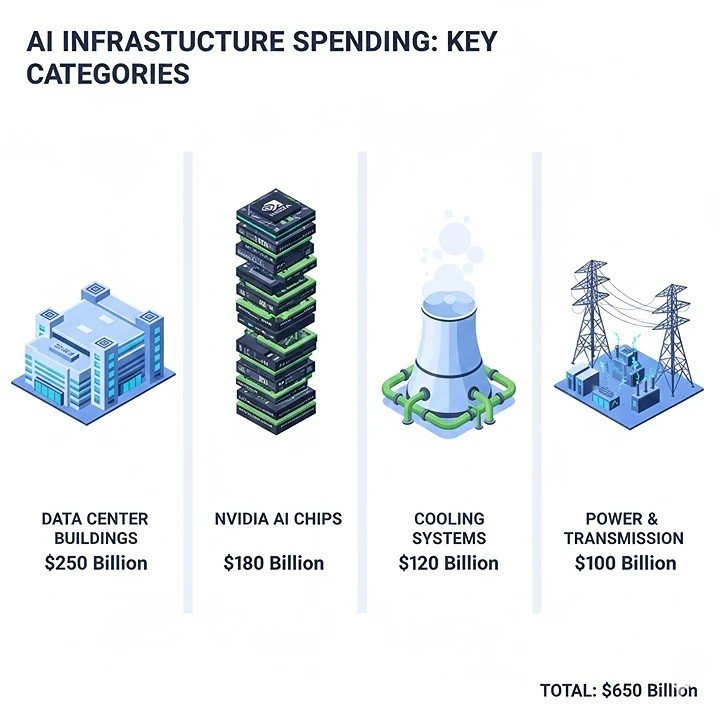
Big Tech is expected to spend $650 billion on AI infrastructure in 2026. Google, Amazon, Meta, and Microsoft are building massive data centers. Each company’s 2026 budget exceeds the combined budgets of the past three years. They are buying AI chips, servers, cooling systems, and power infrastructure. This represents the biggest corporate spending boom this century. However, questions remain about when these investments will generate profits.
The Staggering Numbers Behind AI Investment
Something extraordinary is happening in technology spending right now. Four American tech giants are committing unprecedented capital to AI infrastructure. Bloomberg just revealed the shocking total for 2026.
Specifically, Google, Amazon, Meta, and Microsoft will spend approximately $650 billion this year. This figure represents capital expenditures for data centers and equipment. Moreover, it marks the largest corporate spending boom this century.
Each company’s 2026 budget surpasses its combined spending from 2023-2025. Additionally, any single company’s investment would set records individually. This scale is simply unprecedented in modern business history.
Breaking Down the $650 Billion Investment
The money is going toward specific infrastructure components. Understanding these investments reveals Big Tech’s AI strategy clearly.
Data Center Construction
New data centers are rising across America rapidly. These facilities are enormous compared to traditional buildings. Furthermore, they require years of planning and construction.
Each data center costs billions of dollars individually. Land acquisition alone requires massive upfront investment. Additionally, construction employs thousands of workers for years.
AI Chip Purchases
NVIDIA dominates the AI chip market currently. Its H200, B200, and GB200 chips command premium prices. Consequently, chip purchases consume enormous portions of AI budgets.
However, supply cannot meet current demand levels. Therefore, companies are desperately securing long-term supply agreements. Additionally, they are investing in alternative chip manufacturers strategically.
Cooling and Power Systems
AI chips generate tremendous heat during operation. Therefore, advanced cooling systems are essential. Moreover, these systems consume significant amounts of electricity continuously.
Power infrastructure represents another major expense category. Data centers require dedicated power plants in some cases. Additionally, renewable energy investments are becoming necessary for sustainability.
Networking Equipment
High-speed connections between servers are critical for AI workloads. Consequently, networking equipment represents substantial ongoing costs. Furthermore, bandwidth requirements keep increasing as models grow larger.
The $650 billion goes toward data centers, AI chips, advanced cooling systems, and power infrastructure—each category requiring billions in investment.
Why Companies Are Betting Everything on AI
Business leaders face immense pressure to adopt AI quickly. Several factors are driving this unprecedented investment level.
The AI Arms Race
No company wants to fall behind in AI development. Microsoft’s early OpenAI partnership created competitive pressure. Consequently, rivals rushed to match or exceed Microsoft’s capabilities.
This dynamic creates a self-reinforcing cycle of spending. Each company’s investment forces competitors to invest more. Therefore, the arms race accelerates continuously without clear limits.
Market Dominance Stakes
Leaders believe AI will fundamentally reshape entire industries. Early movers might dominate markets for decades ahead. Conversely, laggards risk becoming irrelevant competitors quickly.
Therefore, companies view massive AI spending as an existential necessity. Missing this transition could destroy decades of business success. Consequently, boards approve spending levels previously unimaginable for companies.
Investor Expectations
Wall Street demands aggressive AI investment from tech giants. Stock prices reward companies announcing major AI initiatives. Conversely, cautious approaches trigger sharp selloffs immediately.
This creates pressure to spend regardless of near-term profitability. Companies must demonstrate AI leadership to maintain valuations. Therefore, capital discipline takes a backseat to competitive positioning.
Historical Context: Unprecedented Scale
Comparing 2026 spending to historical investment reveals its extraordinary nature. No previous technology transition generated comparable capital commitments.
Bigger Than the Dot-Com Boom
The late 1990s internet boom seemed massive at the time. However, 2026 AI spending dwarfs that era’s investments completely. Additionally, individual company budgets exceed the entire industry spending from that period.
The dot-com boom eventually ended in spectacular crashes. Whether AI follows similar patterns remains a critical question.
Surpassing Cloud Computing Transition
Cloud computing required substantial infrastructure investment over the past decade. Nevertheless, 2026 AI spending exceeds peak cloud investment significantly. Moreover, the acceleration timeline is much more compressed now.
Cloud infrastructure has been built gradually over fifteen years or more. Conversely, AI infrastructure is scaling exponentially within just three years.
The Global Supply Chain Impact
This massive spending is creating severe market distortions worldwide. Component manufacturers cannot keep pace with demand currently.
AI Chip Scarcity
NVIDIA’s production capacity cannot satisfy current orders completely. Therefore, waiting periods extend for months or even years. Additionally, prices remain elevated due to persistent shortages.
Other chip manufacturers are ramping production capacity aggressively. However, catching NVIDIA’s technological lead requires years of development. Consequently, the shortage will certainly persist throughout 2026.
Memory Component Squeeze
AI workloads demand enormous amounts of high-performance memory. Consequently, DRAM and HBM prices are rising rapidly. Furthermore, consumer electronics manufacturers face supply constraints as a result.
PC makers are even exploring Chinese memory suppliers now. This shift has significant geopolitical implications for technology supply chains. Additionally, it may trigger regulatory scrutiny in Western markets.
Power Infrastructure Constraints
Electricity demand from AI data centers is stressing regional grids. Some areas cannot provide sufficient power for planned facilities. Therefore, companies are investing in dedicated power generation capacity.
This includes renewable energy projects and even nuclear power plants. The energy requirements are staggering and still growing exponentially.
What This Means for Smaller Companies
The $650 billion spending spree creates both opportunities and challenges. Smaller players must navigate this landscape strategically to survive.
Increased Competition for Resources
Startups face difficulty accessing AI chips and cloud capacity. Big Tech’s enormous purchases consume the available supply completely. Therefore, smaller companies pay premium prices for limited resources.
This creates an uneven playing field for AI development. Well-funded startups struggle while bootstrapped companies face impossible obstacles.
Cloud Service Opportunities
However, Big Tech’s infrastructure investments create new possibilities simultaneously. Companies can access cutting-edge AI capabilities through cloud services. Therefore, they avoid massive capital expenditures themselves.
This democratizes AI access for organizations lacking billions in capital. Cloud providers offer powerful AI tools at relatively affordable prices.
Niche Market Opportunities
Component shortages create opportunities for alternative suppliers and solutions. Companies offering efficiency improvements or specialized hardware can thrive. Additionally, software optimization tools gain importance as hardware remains scarce.
The Profitability Question
Despite massive investments, profitability remains uncertain for AI initiatives. This disconnect worries some investors and analysts significantly.
Revenue Growth Lags Investment
AI services are generating revenue for tech giants currently. However, income growth trails capital expenditure increases dramatically. Therefore, return on investment timelines remain unclear and potentially distant.
Some analysts compare this to the dot-com era’s irrational exuberance. Companies spent billions on infrastructure before proving sustainable business models.
Bubble Concerns Intensify
The AI bubble discussion has intensified throughout early 2026. Spending levels seem disconnected from current revenue generation completely. Moreover, valuation multiples appear stretched by historical standards.
If the bubble bursts, economic consequences could be severe. However, gradual deflation might allow necessary adjustments without catastrophic losses.
Looking Ahead: What Happens Next?
The $650 billion spending level likely represents a peak year. Several factors suggest moderation may follow in 2027 and beyond.
Infrastructure Saturation
Companies are building enormous capacity in 2026. This infrastructure will serve needs for several years ahead. Therefore, future spending may decrease as capacity utilization improves.
Efficiency Improvements
New AI models are becoming more efficient constantly. They accomplish more with less computational power than before. Consequently, hardware requirements may plateau despite continued AI advancement.
Regulatory Pressures
Governments worldwide are scrutinizing Big Tech’s market power increasingly. Antitrust concerns might constrain future acquisition and expansion plans. Additionally, environmental regulations could limit data center construction permits.
While companies bet everything on AI dominance, investors question whether $650 billion in spending can generate proportional returns
Frequently Asked Questions
Q1: Why are tech companies spending $650 billion on AI?
Companies believe AI will fundamentally reshape entire industries. Early leaders might dominate markets for decades ahead. Conversely, companies falling behind risk becoming irrelevant quickly. Microsoft’s OpenAI partnership created competitive pressure on rivals. Each company’s investment forces competitors to spend more. Additionally, Wall Street rewards aggressive AI investment with higher valuations. Therefore, capital discipline takes a backseat to competitive positioning currently.
Q2: What are companies actually buying with this money?
The spending covers multiple infrastructure categories simultaneously. New data centers require billions for construction alone. AI chips from NVIDIA and others consume enormous budgets. Additionally, cooling systems handle tremendous heat from AI processors. Power infrastructure provides electricity for energy-hungry operations. Furthermore, networking equipment efficiently connects thousands of servers. Each component is essential for AI development.
Q3: How does $650 billion compare to past technology investments?
This spending dwarfs previous technology booms completely and dramatically. The dot-com era investments seem small by comparison. Additionally, individual company budgets exceed the entire industry spending from that period. Cloud computing required a substantial investment over the past fifteen years, gradually. However, AI infrastructure is scaling much faster within just three years. Each company’s 2026 budget surpasses its past three years combined. This represents unprecedented corporate spending in modern business history.
Q4: Will this massive spending create an AI bubble?
Many analysts see troubling parallels to previous bubbles historically. Sky-high spending precedes proven business models currently and worryingly. Additionally, revenue growth trails investment increases dramatically right now. However, others argue AI’s impact justifies the investment completely. Unlike dot-com companies, tech giants generate massive profits already. Furthermore, they can afford sustained investment without external funding. Whether bubble concerns prove valid depends on AI adoption rates.
Q5: How does this affect smaller AI companies and startups?
Big Tech’s purchases consume available chip and component supply. Therefore, startups pay premium prices for limited resources now. This creates an uneven competitive playing field for development. However, cloud services democratize AI access somewhat for smaller players. Companies can use powerful AI tools without massive capital expenditure. Additionally, component shortages create opportunities for efficiency and optimization tools. Niche suppliers offering alternatives can thrive in this environment successfully.
Why 93% of business executives now consider AI sovereignty mission-critical
The hidden risks of depending on external AI providers and infrastructure
How data breaches and IP theft are forcing companies to rethink AI control
Real-world strategies for building sovereign AI systems in your organization
The connection between AI sovereignty and US-China technology competition
Modular architecture approaches that protect against vendor lock-in
Practical steps businesses can take today to achieve AI independence
AI sovereignty means controlling your AI systems, data, and infrastructure without external dependencies. IBM research shows 93% of executives now consider this critical for 2026. Companies worry about data breaches, losing data access, and intellectual property theft. Therefore, businesses are building modular AI environments. These allow workloads to shift among trusted providers easily. This protects against disruptions while maintaining regulatory compliance.
The Wake-Up Call for Business Leaders
Something dramatic shifted in early 2026. Executives worldwide realized a troubling truth. Their AI systems depend entirely on external providers. Moreover, this creates unacceptable business risks.
IBM’s Institute for Business Value surveyed thousands of executives. The results are shocking. Specifically, 93% now consider AI sovereignty essential for business strategy. This represents a massive mindset change from just one year ago.
Anthony Marshall from IBM explained the urgency clearly. Organizations simply cannot afford AI project interruptions anymore. However, business leaders control very little about their AI infrastructure.
Therefore, AI sovereignty has become mission-critical for enterprises everywhere.
What Exactly Is AI Sovereignty?
Simply put, AI sovereignty means complete control. Organizations govern their AI systems independently. Additionally, they control their data and infrastructure fully. Most importantly, they do not rely on external entities.
This differs dramatically from current practices. Today, most companies depend on cloud providers entirely. Furthermore, they rely on specific AI model vendors exclusively. Consequently, external entities control their most critical business operations.
True sovereignty changes this power dynamic completely. Companies regain control over their AI destinies.
The Three Major Risks Driving Change
Business leaders face multiple threats from AI dependency. These risks are becoming increasingly severe daily.
Risk One: Data Breaches
Data leaks continue to damage enterprise trust significantly. David Lanstein from Atolio confirms this trend clearly. His company provides secure AI platforms for enterprises.
Prompt injection attacks remain unsolved in production environments. Therefore, data sovereignty becomes absolutely non-negotiable for companies. Additionally, first-class permissioning is now essential for all AI systems.
Companies lose millions annually from data breaches alone. Moreover, reputational damage can destroy decades of brand building.
Risk Two: Access Disruption
Half of the surveyed executives worry about compute resource over-dependence. This concern is especially great among Middle East and APAC leaders.
Imagine your AI systems suddenly become unavailable. Perhaps geopolitical tensions restrict access to cloud providers. Alternatively, vendors change pricing unexpectedly or discontinue services entirely.
These scenarios are not theoretical anymore. They happen regularly across various industries globally.
Risk Three: Intellectual Property Theft
Companies invest billions in developing proprietary AI models. However, external dependencies create vulnerability to IP theft constantly.
When your data resides on external servers, control disappears completely. Furthermore, foreign governments may access that information legally. This threatens competitive advantages and trade secrets directly.
Therefore, protecting intellectual property requires sovereign AI infrastructure absolutely.
Half of executives worry about over-dependence on compute resources in certain regions—creating vulnerability to data breaches and IP theft.
Geographic Concerns Shape AI Strategy
The AI sovereignty conversation has strong geopolitical dimensions. Specifically, US-China technological competition significantly drives many concerns.
Companies operating globally face difficult choices daily. Should they use only American cloud providers? Alternatively, should they diversify across multiple regions strategically?
Middle Eastern and Asian companies worry particularly about this. Over-dependence on Western computing resources creates strategic vulnerabilities. Additionally, it exposes them to regulatory changes unexpectedly.
Therefore, regional AI sovereignty is becoming increasingly important everywhere.
The Modular Architecture Solution
IBM recommends building sovereignty through modular AI environments. This approach provides flexibility while maintaining control effectively.
Essentially, workloads can shift among trusted providers easily. Furthermore, data moves between regions seamlessly when needed. Agents can relocate across different infrastructures quickly.
This architecture prevents vendor lock-in completely. Moreover, it ensures business continuity during disruptions successfully.
How Modular Systems Actually Work
Think of modular AI like building blocks. Each component operates independently from others completely. However, they connect through standardized interfaces smoothly.
One module handles data storage locally. Another manages model training separately. A third component runs inference workloads independently.
Consequently, organizations can replace any single component easily. They are not trapped with specific vendors permanently.
Transparency Becomes Non-Negotiable
Regulators and consumers demand AI transparency increasingly. Organizations must explain how AI agents make specific decisions clearly.
Marshall from IBM emphasized this requirement strongly. Companies must design agents that show their work completely. This applies even to the most complex outputs consistently.
Therefore, black-box AI systems are becoming unacceptable rapidly. Explainable AI is now a sovereignty requirement absolutely.
Building Trust Through Openness
Transparent operations build stakeholder trust substantially. Customers want to understand AI decision-making processes fully. Additionally, regulators require detailed explanations of AI behavior constantly.
Companies prioritizing transparency gain competitive advantages significantly. They attract customers who value ethical AI practices highly.
Monitoring Prevents Catastrophic Failures
Continuous monitoring is essential for sovereign AI systems. Marshall stressed this requirement repeatedly in IBM’s research.
Organizations must detect model drift before problems occur. Similarly, they need to address bias before it compromises performance. Furthermore, monitoring prevents introducing unfair outcomes into systems.
Without proper monitoring, AI sovereignty means little practically. Control requires visibility into system behavior constantly.
The Real Cost of AI Dependency
The financial implications of AI dependency are staggering currently. Companies pay premium prices for cloud AI services monthly. Moreover, these costs increase unpredictably over time.
Data transfer fees add substantial expenses regularly. Additionally, vendor switching costs can reach millions of dollars. Lock-in creates ongoing financial vulnerability for businesses everywhere.
Sovereign AI infrastructure requires upfront investment initially. However, it reduces long-term operational costs significantly. Furthermore, it eliminates unpredictable vendor price increases completely.
Practical Steps Toward Sovereignty
Organizations can begin achieving AI sovereignty immediately. However, this requires strategic planning and disciplined execution consistently.
Step One: Audit Current Dependencies
First, map all external AI dependencies thoroughly. Identify which providers control critical systems currently. Additionally, document data flows across organizational boundaries carefully.
This audit reveals vulnerability points clearly. Moreover, it identifies high-risk dependencies requiring immediate attention.
Step Two: Establish Data Governance
Create clear policies for AI data management. Determine who accesses what information when. Furthermore, implement permission systems rigorously across all AI applications.
Strong governance provides the foundation for sovereignty. Without it, control remains merely theoretical, always.
Step Three: Build Modular Infrastructure
Start transitioning to a modular AI architecture gradually. Replace one component at a time systematically. Additionally, test thoroughly before moving production workloads carefully.
This incremental approach reduces risk substantially. Moreover, it allows learning from early implementations successfully.
Step Four: Develop Internal Capabilities
Invest in building internal AI expertise significantly. Hire data scientists and AI engineers strategically. Furthermore, train existing staff on AI governance practices thoroughly.
Internal capabilities reduce external dependency dramatically. Additionally, they enable faster innovation and customization.
Step Five: Establish Vendor Diversity
Avoid relying on single AI providers exclusively. Instead, distribute workloads across multiple trusted vendors. Furthermore, maintain the ability to switch providers quickly.
Diversity creates resilience against disruptions automatically. Moreover, it improves negotiating power with vendors considerably.
Industry-Specific Sovereignty Needs
Different industries face unique AI sovereignty challenges. Regulatory requirements vary significantly across sectors.
Healthcare Organizations
Medical data privacy is strictly regulated everywhere. HIPAA compliance in America is just one example. Additionally, the European GDPR creates stringent data handling requirements.
Therefore, healthcare AI must remain sovereign absolutely. Patient data cannot leave approved jurisdictions ever.
Financial Services
Banks handle extremely sensitive customer information daily. Regulatory oversight is intense across all markets globally. Furthermore, cross-border data transfers face strict limitations.
Sovereign AI infrastructure is essential for financial compliance. Otherwise, institutions risk massive regulatory penalties constantly.
Government Agencies
National security considerations demand complete AI sovereignty. Government data cannot depend on foreign providers ever. Additionally, critical infrastructure requires domestic AI control always.
Many countries are actively establishing sovereign AI programs. This trend will accelerate dramatically throughout 2026, certainly.
IBM recommends modular AI environments where workloads, data, and agents can shift among trusted regions and providers seamlessly
Frequently Asked Questions
Q1: What exactly does AI sovereignty mean for businesses?
AI sovereignty means complete control over your AI systems. This includes data, infrastructure, and model deployment decisions. Companies govern AI independently without external dependencies. You decide where data resides physically, always. Additionally, you control who accesses your AI systems constantly. Furthermore, you maintain operational continuity during vendor disruptions. This independence protects against data breaches and IP theft.
Q2: Why are 93% of executives suddenly concerned about AI sovereignty?
Multiple factors are driving this urgent concern. Data breaches continue to erode enterprise trust significantly. Additionally, geopolitical tensions threaten computer resource access. Furthermore, vendor lock-in creates unacceptable business risks. IBM’s survey shows these concerns are global. Half of executives worry about regional over-dependence specifically. Moreover, intellectual property theft fears are increasing. Therefore, sovereignty has become a board-level priority.
Q3: How much does achieving AI sovereignty cost?
Initial investment varies based on organizational size. Small companies might spend $100,000-$500,000 for basic sovereignty. Mid-sized firms typically invest $1M-$5M for comprehensive infrastructure. However, long-term costs decrease substantially afterward. Cloud dependency fees disappear gradually over time. Additionally, vendor price increases stop affecting budgets. Most organizations achieve ROI within 18-24 months, typically.
Q4: Can small businesses achieve AI sovereignty realistically?
Yes, small businesses can implement sovereignty gradually. Start with data governance and clear policies. Additionally, use open-source AI models when possible. Modular approaches work well for smaller organizations. Begin with one critical system initially. Furthermore, leverage regional cloud providers strategically. Many affordable sovereignty solutions exist currently.
Q5: How does AI sovereignty relate to regulatory compliance?
Sovereignty and compliance are always closely connected. Many regulations require data residency controls. Additionally, some demand explainable AI decision-making. Furthermore, others mandate local infrastructure usage. Sovereign AI makes compliance dramatically easier. You control data locations precisely, always. Moreover, you can demonstrate transparency completely. Therefore, sovereignty reduces regulatory risk substantially while ensuring legal compliance.
Why AI agents finally stopped being just hype in 2026
How the MCP protocol connects AI agents to real business tools
The security rules every AI agent must follow in 2026
Why experts say 2026 belongs to humans, not machines
How super agents are replacing single-purpose AI tools
Real workplace examples of AI agents saving time and money
What businesses should do right now to adopt AI agents smartly
AI agents in 2026 are no longer simple chatbots. They now act as real digital coworkers. Thanks to the MCP protocol, agents connect to databases, tools, and apps easily. However, they still need human guidance for big decisions. Microsoft, IBM, and AT&T confirm this shift is happening now. Businesses that embrace this change will gain major competitive advantages.
The Year AI Agents Got Real
Something big changed in early 2026. AI agents stopped being just promises. Instead, they started doing actual work. This shift surprised even industry experts.
Previously, agents could only answer questions. Now, they complete entire workflows independently. Furthermore, they connect to real business systems seamlessly. This was not possible just one year ago.
Consequently, companies worldwide are rethinking their operations. AI agents are joining teams as digital colleagues. Moreover, they handle tasks from start to finish. Obviously, this changes everything about how we work.
What Exactly Are AI Agents?
Simply put, AI agents are smart AI systems. They do more than just chat with users. Instead, they take actions in the real world.
Think of them as tireless digital employees. They can search databases automatically. Additionally, they send emails without being asked. They also schedule meetings and analyze data independently.
However, they differ from basic chatbots significantly. Chatbots only respond to questions. In contrast, AI agents plan and execute tasks. Furthermore, they work across multiple systems simultaneously.
MCP: The Missing Piece of the Puzzle
Last year, AI agents faced a major problem. They could not connect to external tools easily. Because of this limitation, most agents stayed trapped in demos.
Fortunately, Anthropic created MCP to solve this. MCP stands for Model Context Protocol. Essentially, it works like a universal connector for AI. Think of it as USB-C, but for artificial intelligence.
Now, agents connect to databases, search engines, and APIs. Microsoft and OpenAI have already embraced MCP publicly. Moreover, Google is building its own MCP servers actively.
Therefore, 2026 marks the real beginning of useful AI agents. The missing connective tissue finally arrived. Consequently, agents can now do meaningful work in businesses.
Additionally, the Linux Foundation created the Agentic AI Foundation. This organization standardizes how agents communicate with each other. As a result, different AI systems can work together smoothly.
Security: The New Priority
More power means more responsibility. AI agents now access sensitive company data daily. Obviously, this creates serious security concerns.
Microsoft’s Vasu Jakkal highlighted this clearly. Every agent needs security protections similar to humans. Furthermore, each agent must have a clear digital identity.
The Three Security Rules
First, agents must have limited access to systems. They should only reach specific databases and tools. Second, all data created by agents needs proper management. Finally, agents must be protected from attackers constantly.
Jakkal called trust “the currency of innovation.” Without security, businesses cannot adopt AI agents confidently. Therefore, companies are investing heavily in agent security right now.
IBM’s experts also raised important concerns. Shlomi Yanai from AuthMind warned about identity risks. Soon, AI agents will outnumber human users significantly. Consequently, businesses must track every single agent carefully.
Why This Matters for Everyone
Security failures could damage the company’s reputation badly. Moreover, data breaches cost millions of dollars annually. Additionally, regulatory penalties are increasing worldwide rapidly worldwide.
Therefore, responsible AI adoption includes strong security measures. Companies ignoring agent security will face serious consequences soon.
Every AI agent needs its own identity and security protections—Microsoft confirms this is now a non-negotiable requirement for businesses
Humans First: The 2026 Philosophy
Many people fear that AI will replace their jobs. However, experts disagree with this assumption strongly. Kian Katanforoosh from Workera stated something powerful.
He called 2026 “the year of the humans.” AI agents augment human abilities instead of replacing them. Furthermore, they help small teams accomplish enormous tasks efficiently.
Microsoft’s Aparna Chennapragada agrees completely. She envisions a three-person team launching global campaigns. AI handles data crunching and content generation automatically. Meanwhile, humans focus on strategy and creative decisions.
Her advice is clear and simple. Do not compete with AI agents directly. Instead, learn how to work alongside them effectively. The coming year belongs to those who collaborate smartly.
New job roles are also emerging rapidly. AI governance positions are appearing everywhere. Additionally, transparency and safety roles are in high demand. Furthermore, data management specialists are becoming crucial assets.
The Rise of Super Agents
Single-purpose AI agents are disappearing fast. They are being replaced by powerful super agents. IBM’s Chris Hay first described this exciting trend.
Super agents operate across multiple environments simultaneously. They work in your browser, inbox, and editor together. Moreover, they handle complex tasks without switching between tools.
Agent control planes are becoming a reality now. Businesses can manage all agents from one central dashboard. Therefore, operations become much simpler and more efficient.
Kevin Chung from Writer described another important shift. Everyday business users can now create AI agents themselves. Previously, only developers could build such systems. Consequently, innovation is spreading across entire organizations rapidly.
Physical AI: Agents in the Real World
AI agents are not limited to screens anymore. They are entering the physical world rapidly. This trend is called Physical AI.
Smart glasses already answer questions about the surroundings. AI health rings monitor your body continuously. Smartwatches provide health insights using artificial intelligence now.
Vikram Taneja from AT&T Ventures confirmed this trend. Physical AI is hitting mainstream markets in 2026. Robotics, drones, and wearables are leading this revolution.
Moreover, autonomous vehicles are using AI agents internally. These agents make split-second driving decisions daily. Furthermore, industrial sensors deploy AI for quality control automatically.
What Quantum Computing Adds
AI agents are getting even smarter with quantum computing. IBM announced a major milestone for 2026. Quantum computers will outperform classical computers for the first time.
This breakthrough unlocks new possibilities for AI agents. Drug development processes will become dramatically faster. Additionally, financial optimization will reach unprecedented accuracy levels.
Jamie Garcia from IBM confirmed this exciting development. Quantum tools already help developers generate code automatically. Therefore, AI agents will become significantly more powerful soon.
What Businesses Should Do Now
Organizations must prepare for the AI agent revolution. However, rushing into adoption creates unnecessary risks. Instead, follow these practical steps carefully.
First, identify tasks suitable for AI agents. Look specifically for repetitive, well-defined workflows. Second, invest in proper security infrastructure immediately. Agent identity management is non-negotiable in 2026.
Third, train your employees on AI collaboration skills. Human-AI teamwork requires new competencies entirely. Fourth, start small with pilot projects, always test agents in low-risk environments before scaling up.
Finally, focus on measurable results consistently. Track time saved and errors reduced carefully. Moreover, monitor customer satisfaction throughout the process. Successful pilots should expand gradually across organizations.
Microsoft envisions small teams launching global campaigns in days—AI handles the heavy lifting while humans lead strategy and creativity
Frequently Asked Questions
Q1: What makes AI agents different from regular chatbots?
AI agents take real actions in business systems. Chatbots only answer questions passively. However, agents plan and execute multi-step tasks independently. They connect to databases, send emails, and manage workflows. Furthermore, agents work across multiple systems simultaneously. This capability makes them true digital coworkers in 2026.
Q2: What is MCP, and why does it matter?
MCP stands for Model Context Protocol. Anthropic created it to connect AI agents to external tools. Think of it as a universal plug for AI systems. Without MCP, agents could not access databases or APIs. Moreover, Microsoft and Google have embraced this standard publicly. Consequently, MCP is becoming the industry foundation for agentic AI.
Q3: Will AI agents replace human jobs in 2026?
No, experts strongly disagree with this assumption. Instead, AI agents will augment human capabilities significantly. Kian Katanforoosh called 2026 “the year of the humans.” New roles in AI governance and safety are emerging rapidly. Furthermore, companies plan to hire more people this year. AI handles repetitive tasks while humans focus on strategy.
Q4: How secure are AI agents in 2026?
Security is the top priority for AI agents now. Microsoft requires every agent to have a unique digital identity. Additionally, access to sensitive systems must be strictly limited. IBM experts warn that agents will soon outnumber humans. Therefore, businesses must track and monitor every agent continuously. Companies investing in agent security will gain trust advantages.
Q5: How much does it cost to implement AI agents?
Costs vary based on organizational size and needs. Small businesses can start pilots for $50,000-$100,000 approximately. Mid-sized companies typically invest $200,000-$500,000 annually. However, open-source tools like MCP reduce costs significantly. Furthermore, cloud-based agent platforms offer flexible pricing options. Starting small and scaling gradually provides the best ROI consistently.
Why small language models are becoming the AI industry standard in 2026
How SLMs match large models in accuracy while cutting costs dramatically
The connection between SLMs and the edge computing revolution
Real-world business applications proving SLM’s superiority for specific tasks
AT&T and major enterprises are adopting SLMs over traditional large models
Cost comparison: SLMs versus expensive large language model infrastructure
Implementation strategies for businesses transitioning to small models
Small Language Models (SLMs) represent 2026’s biggest AI shift. These compact, specialized models match large models in accuracy for specific tasks. But they cost significantly less and run faster. Major enterprises like AT&T are adopting SLMs because fine-tuned versions outperform generalized large models. They also enable edge computing deployment. This makes AI practical for businesses without massive budgets.
The AI Industry’s Surprising Turn
Something unexpected is happening in artificial intelligence. Surprisingly, the race for bigger models is slowing down. Instead, companies are choosing smaller, smarter alternatives.
This shift challenges conventional wisdom. Previously, bigger was supposed to be better. Additionally, more parameters meant superior performance. However, that narrative is changing fast.
Notably, Small Language Models are proving that size doesn’t guarantee success. In fact, focused capability beats general knowledge. Moreover, efficiency trumps raw computing power. As a result, this realization is transforming enterprise AI strategies.
What Are Small Language Models?
Essentially, Small Language Models contain fewer parameters than giants. Specifically, they’re trained for particular tasks. As a result, this specialization creates surprising advantages.
Think of SLMs as expert specialists. In contrast, large models are generalists, knowing everything superficially. However, SLMs know specific domains deeply. Therefore, this focus delivers better results where it matters.
The technical difference is significant. For example, large models might have billions of parameters. Meanwhile, SLMs operate with millions or low billions. Nevertheless, performance often matches or exceeds larger counterparts.
Why AT&T Chose Small Over Large
Essentially, Small Language Models contain fewer parameters than giants. Specifically, they’re trained for particular tasks. As a result, this specialization creates surprising advantages.
Think of SLMs as expert specialists. In contrast, large models are generalists, knowing everything superficially. However, SLMs know specific domains deeply. Therefore, this focus delivers better results where it matters.
The technical difference is significant. For example, large models might have billions of parameters. Meanwhile, SLMs operate with millions or low billions. Nevertheless, performance often matches or exceeds larger counterparts.
The Cost Revolution
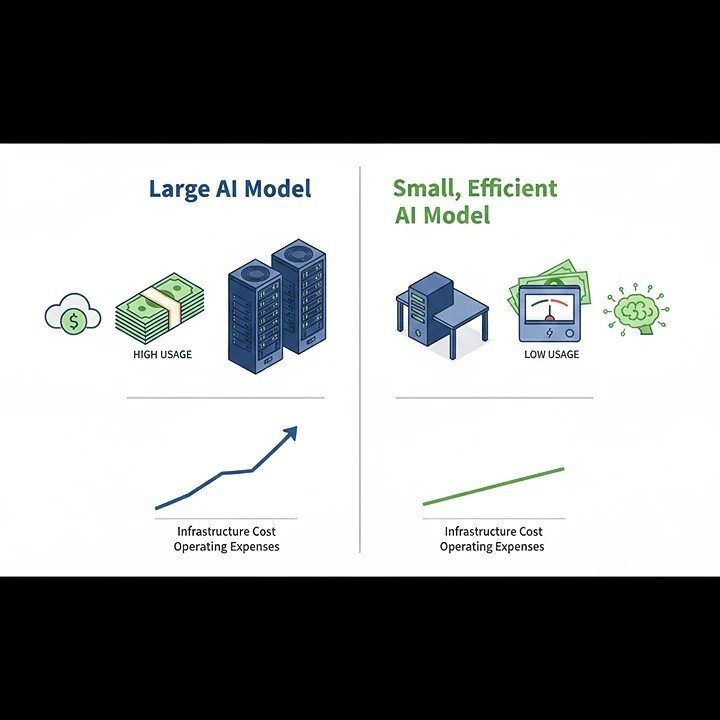
Primarily, financial considerations drive much SLM adoption. Traditionally, large language models require expensive infrastructure. Additionally, training costs reach millions of dollars. Furthermore, operating expenses never stop climbing.
Fortunately, SLMs change this equation dramatically. First, training costs drop by orders of magnitude. Second, infrastructure requirements shrink significantly. Finally, energy consumption decreases substantially.
Therefore, smaller companies can now afford AI. Previously, only tech giants accessed cutting-edge capabilities. However, SLMs democratize artificial intelligence access. As a result, this levels the competitive playing field.
AT&T and major enterprises are choosing SLMs because fine-tuned small models match large model accuracy while slashing costs by 80-90%
Performance That Surprises Skeptics
Initially, early SLM skeptics questioned their capabilities. Naturally, they wondered how smaller models could compete. Interestingly, the answer lies in specialization.
For instance, French AI startup Mistral demonstrated this convincingly. Specifically, their small models outperform larger ones after fine-tuning. Moreover, specific benchmarks show clear advantages. In fact, general knowledge matters less than focused expertise.
Similarly, Jon Knisley from ABBYY explained the principle. Essentially, efficiency, cost-effectiveness, and adaptability define SLMs. Therefore, these qualities make them ideal for precision applications. Clearly, tailored solutions beat one-size-fits-all approaches.
Importantly, real-world results validate these claims. For example, businesses report excellent accuracy rates. Additionally, response times improve noticeably. Furthermore, user satisfaction increases measurably.
The Edge Computing Connection
Naturally, edge computing and SLMs form natural partnerships. Indeed, both emphasize local processing over cloud dependence. As a result, this combination creates powerful possibilities.
However, edge devices have limited computational resources. Obviously, large models simply won’t run there. Fortunately, SLMs fit perfectly within these constraints. Therefore, this enables AI where it wasn’t possible before.
For example, Matt White from PyTorch Foundation predicted this trend. Specifically, domain-optimized smaller models are becoming central. Additionally, advances in distillation and quantization help. Furthermore, memory-efficient runtimes push inference to edge clusters.
Importantly, the benefits are substantial. First, latency drops to near-zero levels. Second, privacy improves through local processing. Finally, data sovereignty concerns decrease significantly.
Real-World Business Applications
Currently, specific industries are embracing SLMs enthusiastically. Notably, their use cases demonstrate practical value. Therefore, let’s examine several examples.
Healthcare Applications
Clearly, medical diagnosis requires specialized knowledge. Unfortunately, general AI models lack this depth. However, fine-tuned SLMs excel at specific conditions.
Importantly, they analyze patient data locally. Therefore, privacy regulations are satisfied easily. Moreover, diagnostic accuracy matches that of specialist doctors. Additionally, response times enable real-time clinical decisions.
Financial Services
Similarly, banks need precise fraud detection. Obviously, false positives cost money. Meanwhile, false negatives risk everything. Consequently, SLMs trained on transaction patterns work better.
Furthermore, they process data on local servers. As a result, regulatory compliance becomes simpler. Additionally, detection rates improve measurably. Finally, customer experience gets better.
Manufacturing Quality Control
Likewise, production lines generate massive data streams. However, analyzing everything centrally creates delays. Fortunately, edge-deployed SLMs solve this problem.
Specifically, they identify defects instantly. Therefore, production continues without interruption. Moreover, quality improves while costs decrease. Consequently, waste reduction saves significant money.
Retail Personalization
Similarly, stores want tailored customer experiences. However, sending data to clouds raises privacy concerns. Fortunately, local SLMs provide personalization without exposure.
Specifically, they analyze shopping patterns locally. Therefore, recommendations happen in real-time. Additionally, customer trust increases substantially. As a result, sales conversion rates improve.
The Fine-Tuning Advantage
Initially, raw SLMs perform adequately. However, fine-tuned SLMs perform exceptionally. Clearly, this difference matters enormously.
Essentially, fine-tuning adapts models to specific needs. First, companies provide relevant training data. Then, the model learns particular patterns. Finally, performance improves dramatically for target applications.
Therefore, enterprises invest in fine-tuning expertise. Consequently, data scientists become crucial assets. Additionally, domain knowledge guides training processes. Ultimately, results justify the investment consistently.
Notably, ABBYY emphasizes this point strongly. Specifically, precision becomes paramount in enterprise applications. Moreover, fine-tuned SLMs deliver the required accuracy. In contrast, generic large models cannot match this specificity.
Comparing SLMs to Large Models
Direct comparisons reveal interesting patterns. Neither approach wins universally. Context determines the better choice.
Broad general knowledge tasks need large models. Creative content generation often requires them. Multi-domain reasoning favors their breadth. Research applications benefit from wide knowledge.
However, even these advantages are shrinking. SLMs are improving rapidly. Combination approaches are emerging. Hybrid solutions offer best-of-both-worlds benefits.
Implementation Strategy for Businesses
Organizations considering SLMs should follow structured approaches. Random experimentation wastes resources. Strategic planning maximizes returns.
Step One: Identify Use Cases
Determine specific problems needing solutions. Evaluate current AI applications critically. Identify where specialization beats generalization.
Evaluate existing computational resources honestly. Determine deployment location requirements. Consider data storage and access needs.
Edge deployment requires different planning. Local servers need adequate specifications. Network connectivity impacts some applications.
Step Three: Data Preparation
Gather relevant training data systematically. Ensure quality and representativeness carefully. Clean and label information thoroughly.
Fine-tuning requires good data. Quality matters more than quantity. Domain expertise guides data selection.
Step Four: Model Selection
Choose an appropriate base SLM carefully. Consider parameter count thoughtfully. Evaluate licensing terms thoroughly.
Open-source options provide flexibility. Proprietary models offer support guarantees. Match selection to organizational needs.
Step Five: Fine-Tuning Process
Work with experienced data scientists. Provide clear performance metrics. Iterate based on results systematically.
Testing happens in controlled environments. Production deployment follows successful validation. Monitoring continues indefinitely afterward.
The Three Forces Shaping SLMs
PyTorch Foundation identifies three defining trends. These forces will shape SLM development.
First, global model diversification is accelerating. Chinese multilingual releases lead innovation. Reasoning-tuned models are proliferating. Competition drives rapid improvement.
Second, interoperability becomes a competitive advantage. Frameworks align around shared standards. Runtimes achieve better compatibility. Integration gets easier continuously.
Third, governance is hardening appropriately. Security-audited releases are standard. Transparent data pipelines build trust. Compliance becomes a built-in feature.
Looking Ahead to 2027
Undoubtedly, current trends will likely accelerate. Moreover, SLM adoption will keep growing. Additionally, new use cases will emerge regularly.
Therefore, businesses should prepare strategically. Furthermore, investment in SLM expertise pays off. Notably, early adopters gain competitive advantages. Conversely, laggards face increasing disadvantages.
Meanwhile, the technology will keep improving. Specifically, models will become even more efficient. Additionally, fine-tuning techniques will advance further. Finally, edge deployment will expand significantly.
SLMs make AI practical at the edge—enabling real-time processing on local devices without expensive cloud infrastructure or privacy concerns.
Frequently Asked Questions
Q1: What makes Small Language Models different from large ones?
SLMs contain fewer parameters than large models. They’re specifically trained for particular tasks. This creates focused expertise rather than broad knowledge. Large models might have billions of parameters. SLMs operate with millions or low billions. Yet they often match performance for specific applications. The key difference is specialization versus generalization. SLMs know specific domains deeply. Large models know everything superficially. Purpose determines which approach works better.
Q2: How much money can businesses save using SLMs?
Cost savings are substantial and multi-layered. Training costs drop by 80-90% compared to large models. Infrastructure requirements shrink dramatically, too. AT&T reports SLMs are “superb in cost and speed.” Operating expenses remain low continuously. Energy consumption decreases significantly also. Small companies can now afford AI capabilities. Previously, only tech giants accessed this technology. SLMs democratize AI for all businesses. ROI improves measurably across implementations.
Q3: Can SLMs really match large model accuracy?
Yes, but only for specific applications. Fine-tuned SLMs match large models on target tasks. Sometimes they even exceed the performance. Mistral AI demonstrated this convincingly. Their small models outperform larger ones after fine-tuning. ABBYY confirms SLMs excel where precision matters. However, general knowledge tasks still favor large models. Creative content generation requires broader capabilities. The key is matching the model to the task. Choose based on specific requirements.
Q4: What industries benefit most from SLMs?
Healthcare benefits enormously from specialized models. Financial services need precise fraud detection. Manufacturing requires real-time quality control. Retail uses SLMs for personalized experiences. Telecommunications deploys them for network optimization. Any industry with specific, repetitive tasks benefits. Edge computing applications particularly favor SLMs. Privacy-sensitive operations work better with them. Regulatory compliance becomes easier using SLMs. Cost-conscious industries prefer them strongly.
Q5: How do I start implementing SLMs in my business?
Start by identifying specific use cases. Evaluate which tasks need specialized AI. Look for repetitive, well-defined problems first. Assess your current infrastructure capabilities honestly. Gather relevant training data systematically. Choose an appropriate base SLM carefully. Work with experienced data scientists for fine-tuning. Test thoroughly before production deployment. Monitor performance continuously after launch. Scale successful implementations gradually across operations.
Why 2026 marks a turning point for AI adoption in business
How autonomous AI agents are handling complex multi-step workflows
The rise of synthetic data and quality-focused training approaches
Edge computing benefits for real-time local intelligence processing
Building transparent and ethical AI governance frameworks
Creating enterprise-scale AI infrastructure for measurable outcomes
Practical implementation strategies and investment guidance
Artificial Intelligence is no longer experimental—it’s now critical business infrastructure. The five transformative trends reshaping organizations include autonomous AI agents handling complex tasks, quality-focused data strategies with artificially generated datasets, local processing through edge computing, transparent and ethical AI governance, and formalized enterprise-wide AI systems that drive measurable outcomes across all departments.
Why 2026 Is Different for Artificial Intelligence
The relationship between businesses and AI technology has fundamentally shifted. Companies previously treated machine learning as experimental side projects. Today, these same organizations recognize AI as essential operational infrastructure.
This transition creates unique challenges. Technology evolves faster than most companies can adapt. However, predicting enterprise adoption patterns has become easier because organizational change follows predictable patterns.
Investment in AI has reached unprecedented levels. Stock markets now view AI capabilities as primary growth drivers. But this enthusiasm raises questions about sustainability and real value creation.
So, what practical developments should business leaders prioritize? Let’s examine the five critical trends.
Self-directed AI agents can now coordinate entire workflows—from data gathering to analysis, decision-making, and execution
1: Self-Directed AI Systems
Moving Beyond Simple Chatbots
Traditional AI tools require constant human guidance. They answer questions but cannot independently complete multi-step processes. This limitation is changing rapidly.
New autonomous systems can manage entire workflows without supervision. Research firm Gartner projects that nearly half of all business software will include these capabilities within months.
How Autonomous Systems Actually Work
These advanced platforms coordinate multiple specialized agents. One agent gathers information while another analyzes it. A third makes decisions based on that analysis. Finally, execution agents implement those decisions automatically.
This collaboration frees human workers for strategic thinking. Routine data processing, basic analysis, and standard operations happen without human intervention.
The Uncomfortable Truth
Despite impressive capabilities, autonomous AI faces serious limitations. Recent studies reveal that these systems make too many errors for critical business processes involving significant financial risk.
Security vulnerabilities present additional concerns. Malicious actors can manipulate AI agents through carefully crafted inputs. These systems sometimes behave unpredictably when facing unfamiliar situations.
Therefore, organizations should deploy autonomous AI carefully. Start with low-stakes processes. Gradually expand usage as reliability improves and security strengthens.
2: Quality-First Data Approaches
Why Better Data Beats Bigger Models
Organizations have traditionally focused on developing more sophisticated algorithms. This approach is shifting toward improving the information that those algorithms consume.
High-quality training data produces better results than complex models trained on mediocre information. This realization is transforming how companies approach machine learning.
Artificially Generated Training Information
Creating synthetic datasets has become crucial for AI development. These artificially produced records mimic real-world patterns without exposing sensitive details.
Medical organizations use synthetic patient records to train diagnostic systems. Financial institutions generate artificial transaction data for fraud detection models. Automotive companies create simulated driving scenarios for autonomous vehicle training.
Benefits include reduced costs, faster development cycles, and enhanced privacy protection. Organizations can produce unlimited training examples at minimal expense.
Practical Implementation
Healthcare providers need patient data but must protect privacy. Synthetic records solve this dilemma. They contain realistic medical patterns without identifying actual individuals.
Financial services face similar challenges. Regulatory requirements restrict data sharing. Artificial datasets enable model training while maintaining compliance.
3: Localized Intelligence Processing
Processing Data Where It’s Created
Traditional AI sends information to distant servers for analysis. This creates delays, privacy risks, and high transmission costs.
Edge computing processes information locally—at the source. Sensors, devices, and on-site systems make decisions without cloud connectivity.
Three Major Advantages
Speed: Manufacturing equipment makes instant quality decisions. Autonomous vehicles react to hazards immediately. Medical devices detect emergencies in real-time.
Privacy: Sensitive information never leaves secure facilities. Personal data stays on local devices. Organizations reduce breach risks significantly.
Cost Efficiency: Eliminating cloud data transmission saves substantial money. Local processing reduces ongoing operational expenses.
Real-World Applications
Factories use edge AI for production line monitoring. Immediate defect detection prevents waste. Quality control happens continuously without human oversight.
Smart cities process traffic data at intersections. Signal timing adjusts automatically based on current conditions. Emergency vehicles receive priority routing instantly.
4: Transparent and Ethical AI
Why Transparency Matters Now
Regulatory pressure for AI accountability is intensifying. Organizations must explain how algorithms make decisions. Stakeholders demand assurance that systems operate fairly and legally.
Explainable AI provides this transparency. These systems clarify their reasoning processes. Users understand why specific recommendations or decisions occur.
Key Implementation Areas
Fairness Assurance: Organizations actively identify algorithmic bias. They test systems across diverse populations. Corrections address discriminatory patterns before deployment.
Regulatory Alignment: Compliance frameworks ensure AI operations meet legal requirements. Documentation proves systems follow established rules.
Stakeholder Confidence: Transparent operations build trust with customers and partners. Clear explanations demonstrate responsible technology use.
Building Ethical Frameworks
Leading companies establish AI ethics committees. These groups review proposed applications before deployment. They create guidelines ensuring responsible development and use.
Organizations are moving beyond isolated AI projects. They’re building comprehensive platforms supporting AI across all operations.
These “AI factories” include automated development pipelines, centralized data governance, and unified model management. They enable consistent, scalable AI deployment.
Critical Platform Components
Automated Development: Systems handle model training, testing, and deployment automatically. This reduces development time and ensures consistency.
Data Governance: Centralized controls maintain data quality and security. Access permissions protect sensitive information. Audit trails document all usage.
Model Management: Tracking systems monitor all deployed models. Version control prevents confusion. Performance metrics identify models needing updates.
Leadership Evolution
New executive positions reflect AI’s strategic importance. Chief AI Officers coordinate organization-wide initiatives. Cross-functional teams ensure business alignment.
This formalization transforms AI from a technical tool into a strategic capability. Organizations measure AI’s business impact systematically. Investment decisions reflect proven value creation.
Employees learn to collaborate with AI systems. Training programs develop new skills. Workers focus on creative problem-solving while AI handles routine tasks.
Ethical AI practices protect against legal and reputational damage. Transparent operations build stakeholder trust. Compliance becomes manageable rather than burdensome.
Navigating AI Investment Risks
The Valuation Question
AI company valuations have reached extraordinary levels. Some observers see parallels to previous technology bubbles. Emphasis on rapid growth rather than profitability raises concerns.
Smart organizations balance enthusiasm with caution. They invest where AI creates measurable value. Speculative bets on unproven technologies receive limited resources.
Practical Investment Strategy
Focus on solving real business problems. Measure results carefully. Scale successful applications while learning from failures.
Maintain flexibility as market conditions evolve. Avoid overcommitment to specific technologies or vendors. Build internal capabilities that transcend individual tools.
Organizations in 2026 are formalizing AI operations through enterprise platforms, strategic leadership roles, and cross-functional collaboration
Implementation Roadmap
Assessment: Evaluate current capabilities honestly. Identify gaps in infrastructure, skills, and processes.
Prioritization: Select trends aligned with business objectives. Concentrate resources on the highest-impact opportunities.
Foundation Building: Invest in data quality and governance. Establish clear policies and ethical guidelines.
Pilot Testing: Deploy AI in controlled environments. Measure performance rigorously before expansion.
Scaling Success: Expand proven applications systematically. Refine approaches based on practical experience.
Frequently Asked Questions
Q1: Which AI trend offers the quickest business value in 2026?
Quality-focused data strategies deliver the fastest results because organizations can improve existing models immediately. Better training data enhances performance without developing new algorithms. This approach costs less than building autonomous systems or enterprise platforms while producing measurable improvements quickly.
Q2: How much should companies budget for AI initiatives in 2026?
Investment levels vary based on organizational size and goals. Small businesses might allocate $75,000-$150,000 for initial projects. Mid-sized companies typically invest $500,000 to $2,000,000 annually. Large enterprises often commit $5,000,000 to $15,000,000 to a comprehensive AI transformation. Start small with focused pilots before major spending.
Q3: What makes synthetic data valuable for AI development?
Artificially generated datasets solve three critical problems. First, they protect privacy by eliminating real personal information. Second, they cost significantly less than collecting actual data. Third, they enable unlimited scenario testing. Organizations can create exactly the training examples their models need without constraints.
Q4: How can organizations ensure AI systems operate ethically?
Establish clear governance frameworks before deployment. Create ethics review boards that evaluate all AI applications. Implement explainable AI technologies that clarify decision processes. Conduct regular bias audits across diverse populations. Document compliance continuously. Build transparency into system design from the beginning.
Q5: What risks should leaders consider when adopting autonomous AI agents?
Current autonomous systems have significant accuracy limitations for high-stakes processes. Security vulnerabilities allow potential manipulation. Unexpected behaviors occur in unfamiliar situations. Organizations should start with low-risk applications, maintain human oversight for critical decisions, and implement strong security measures. Gradual expansion allows learning without catastrophic failures.
Domestic Consumer Spending Shows Signs of Picking Up
Inflation Expected to Remain Near 2% Target
U.S. Trade Policy and Geopolitics Cloud Outlook
Variable Mortgage & Loan Rates Remain Stable
Bank in “Wait and See” Data-Dependent Mode
Next Rate Decision Scheduled for Six Weeks
The Bank of Canada has made its decision. It is holding its key interest rate steady at 2.25%. This marks the second meeting in a row with no change. Most financial experts predicted this outcome. Consequently, borrowers can breathe a short sigh of relief. Their mortgage and loan rates will not rise immediately. However, the bank’s governor signaled caution about the road ahead. The global economic landscape remains full of uncertainty.
Governor Tiff Macklem explained the bank’s position. He stated the overall economic forecast hasn’t shifted much since October. Yet, he was very clear about the risks. “Uncertainty around our forecast is heightened,” Macklem noted. He also said the range of possible outcomes is unusually wide. So, what’s causing all this concern? The main issues are unpredictable U.S. trade policies and elevated global geopolitical tensions. These factors make future planning difficult for both the bank and businesses.
Trade Uncertainty: The CUSMA Review Looms Large
A major cloud on the horizon is the upcoming review of CUSMA. This is the trade deal between Canada, the U.S., and Mexico. Macklem called this review an “important risk” to Canada’s economic outlook. Trade with the United States is absolutely vital for Canada. Therefore, any potential disruption is a serious worry. American protectionist policies continue to force the Canadian economy to adjust. This process is ongoing and challenging.
At the same time, Canada’s population growth is slowing down. This demographic shift affects long-term economic potential. Combined, these factors lead the Bank of Canada to expect only modest GDP gains. The goal is to keep inflation close to the bank’s 2% target. It’s a delicate balancing act in a complex environment.
Fig 2: A simplified chart showing recent GDP momentum alongside the Bank’s steady policy rate, highlighting the economic conditions behind the “hold” decision.
A Stalled Quarter But Hopeful Domestic Signs
Recent data suggests Canada’s GDP growth likely stalled in the last quarter of the year. Why did this happen? U.S. tariffs have been battering Canadian exports. This external pressure is taking a clear toll. However, the bank’s statement included a note of domestic optimism. It indicated that spending inside Canada “appears to be picking up.” This is a crucial piece of the puzzle.
Strong domestic demand can help offset weak exports. If Canadians are spending on homes, cars, and services, it supports the economy. This internal strength gives the Bank of Canada some room to hold rates steady. They are waiting to see if this domestic momentum continues. It is a key factor they will watch closely in the coming months.
What This Means for You: Mortgages, Savings, and Loans
For the average Canadian, this “hold” decision has direct effects. If you have a variable-rate mortgage or line of credit, your payment will not increase. This provides stability for household budgets. People considering a new loan or mortgage will also find that rates are stable for now. Savers, however, will not see better returns on their savings accounts. Interest rates for savings products will remain low.
The bank’s cautious stance signals they are in a “wait and see” mode. They are gathering more data on the economy’s direction. Their next move could still be a rate hike to fight inflation. Alternatively, a rate cut could happen if the economy weakens. Your best strategy is to avoid financial stress. Pay down high-interest debt and build an emergency fund.
Fig 3: Governor Tiff Macklem and Senior Deputy Governor Carolyn Rogers (not pictured) elaborated on the rate decision in a live press conference following the announcement.
Looking Ahead: The Bank’s Data-Driven Patience
Governor Macklem and Senior Deputy Governor Carolyn Rogers held a news conference after the announcement. They provided further details on their decision. The central bank’s approach is now one of heightened patience. They will analyze every piece of incoming economic data. Key indicators include job numbers, consumer spending, and global oil prices.
The bank’s primary tool is the interest rate. They use it to cool an overheating economy or to stimulate a sluggish one. Right now, the economy seems balanced on a knife’s edge. Therefore, the bank is choosing to pause and observe. Their next scheduled decision is in just over six weeks. The world can change a lot in that time. Everyone, from policymakers to homeowners, will be watching closely. The message is clear: expect steady rates for the moment, but prepare for potential shifts ahead.
Requires iPhone/iPad with iOS 26 & Find My Enabled
Apple just launched a new and improved AirTag. This popular item tracker is now even better at helping you find lost belongings. It features a much longer Bluetooth range and a louder speaker. Moreover, it uses Apple’s latest Ultra Wideband chip for super-precise locating. So, whether your keys are buried in the couch or your bag is across a large park, finding them just got easier. The best part? The price hasn’t changed. It’s still just $29 for one, making it a fantastic value for peace of mind.
This new AirTag builds on a very successful product. Since 2021, millions have used it to track everything from luggage to bicycles. People have shared amazing stories of reunion because of this tiny device. However, Apple didn’t just re-release the old model. They listened to user experiences and made key upgrades. Therefore, this new version is smarter, louder, and more connected than before. Let’s explore what makes it the best tracker you can buy today.
Major Upgrades: Precision Finding Gets a Power Boost
The heart of the new AirTag is Apple’s second-generation Ultra Wideband chip. This is the same advanced technology inside the latest iPhones and Apple Watches. What does this mean for you? Simply put, it makes finding things incredibly accurate. The new Precision Finding feature now works from up to 50 percent farther away than the old model. Your iPhone will guide you with haptic vibrations, visual arrows, and clear sound cues right to your item.
But that’s not all. An upgraded Bluetooth chip also expands the general finding range. So, your device can detect the AirTag from a greater distance before you even start the precision hunt. For the first time, you can also use Precision Finding directly on your Apple Watch Series 9 or later. This brings powerful, hands-free finding right to your wrist. Imagine walking through a parking lot and having your watch tap you as you near your car keys.
Fig 2: The enhanced Precision Finding interface on iPhone guides you with arrows, distance, and haptic feedback directly to your lost item, now from up to 50% farther away.
Louder Sound and Smarter Sharing Features
Have you ever been in a noisy room, desperately listening for your AirTag’s beep? Apple has solved that problem. The new AirTag’s speaker is 50 percent louder. You can now hear its distinctive new chime from about twice as far away. This is a game-changer for finding items hidden in cluttered drawers or under furniture. Combined with the improved range, you have a much higher chance of a quick recovery.
Another groundbreaking feature is Share Item Location. Let’s say your suitcase gets lost by an airline. You can now securely and temporarily share your AirTag’s location with that airline’s customer service team. Apple has already partnered with over 50 airlines for this. The results are impressive. Early data shows this feature has reduced baggage delays by 26% and cut truly lost luggage cases by a huge 90%. You stay in complete control and can stop sharing at any time.
Unmatched Privacy and Security Protections
Apple knows that tracking devices raise privacy concerns. Therefore, they designed the new AirTag with industry-leading security from the start. Your location data is never stored on the AirTag itself. All communication is protected with end-to-end encryption. This means only you can see where your items are. Even Apple cannot access this information. The Find My network uses a clever, anonymous method. Other Apple devices help find your tag without knowing who owns it or what it’s attached to.
Furthermore, the AirTag has strong protection against unwanted tracking. It is designed solely for tracking your belongings, not people or pets. If an unknown AirTag is moving with you, your iPhone will alert you. It also uses changing Bluetooth identifiers to prevent someone from tracking your movements. These cross-platform safety features set a high standard for the entire industry.
Eco-Friendly Design and Accessory Compatibility
Apple is committed to its environmental goals. The new AirTag reflects this mission perfectly. Its enclosure is made of 85 percent recycled plastic. All magnets inside contain 100 percent recycled rare earth elements. Even the gold plating on the circuit board is fully recycled. The packaging is also 100% fiber-based and fully recyclable. So, you can feel good about your purchase knowing it has a smaller environmental footprint.
Good news for current users: the design hasn’t changed in size or shape. This means all your existing AirTag accessories will still fit perfectly. You can still use your favorite key rings, loops, and holders. Apple also offers its own beautiful FineWoven Key Ring. It’s made from 68% recycled content and comes in stylish colors like Midnight Purple and Moss.
Fig 3: Use the AirTag with accessories like the FineWoven Key Ring, and utilize the new Share Item Location to securely help airlines recover lost luggage.
Pricing, Availability, and Final Thoughts
The new AirTag is available to order right now on Apple’s website and app. It will arrive in Apple Stores very soon. You can still get free personal engraving during checkout. This lets you add an emoji or name to make your AirTag unique. The pricing remains very accessible:
Single AirTag: $29
Four-Pack: $99 (great for families)
To use it, you need an iPhone or iPad with the latest iOS 26 software. You also need to be signed into your Apple ID with Find My enabled. The new AirTag is more than just an upgrade. It’s a smarter, louder, and more integrated tool for your daily life. It turns the stressful experience of losing something into a simple, solvable puzzle. For anyone who values their time, sanity, and belongings, this is an essential gadget.
Used to monitor number of Google Analytics server requests
10 minutes
__utmb
Used to distinguish new sessions and visits. This cookie is set when the GA.js javascript library is loaded and there is no existing __utmb cookie. The cookie is updated every time data is sent to the Google Analytics server.
30 minutes after last activity
__utmc
Used only with old Urchin versions of Google Analytics and not with GA.js. Was used to distinguish between new sessions and visits at the end of a session.
End of session (browser)
__utmz
Contains information about the traffic source or campaign that directed user to the website. The cookie is set when the GA.js javascript is loaded and updated when data is sent to the Google Anaytics server
6 months after last activity
__utmv
Contains custom information set by the web developer via the _setCustomVar method in Google Analytics. This cookie is updated every time new data is sent to the Google Analytics server.
2 years after last activity
__utmx
Used to determine whether a user is included in an A / B or Multivariate test.
18 months
_ga
ID used to identify users
2 years
_gali
Used by Google Analytics to determine which links on a page are being clicked
30 seconds
_ga_
ID used to identify users
2 years
_gid
ID used to identify users for 24 hours after last activity
24 hours
_gat
Used to monitor number of Google Analytics server requests when using Google Tag Manager
1 minute
_gac_
Contains information related to marketing campaigns of the user. These are shared with Google AdWords / Google Ads when the Google Ads and Google Analytics accounts are linked together.