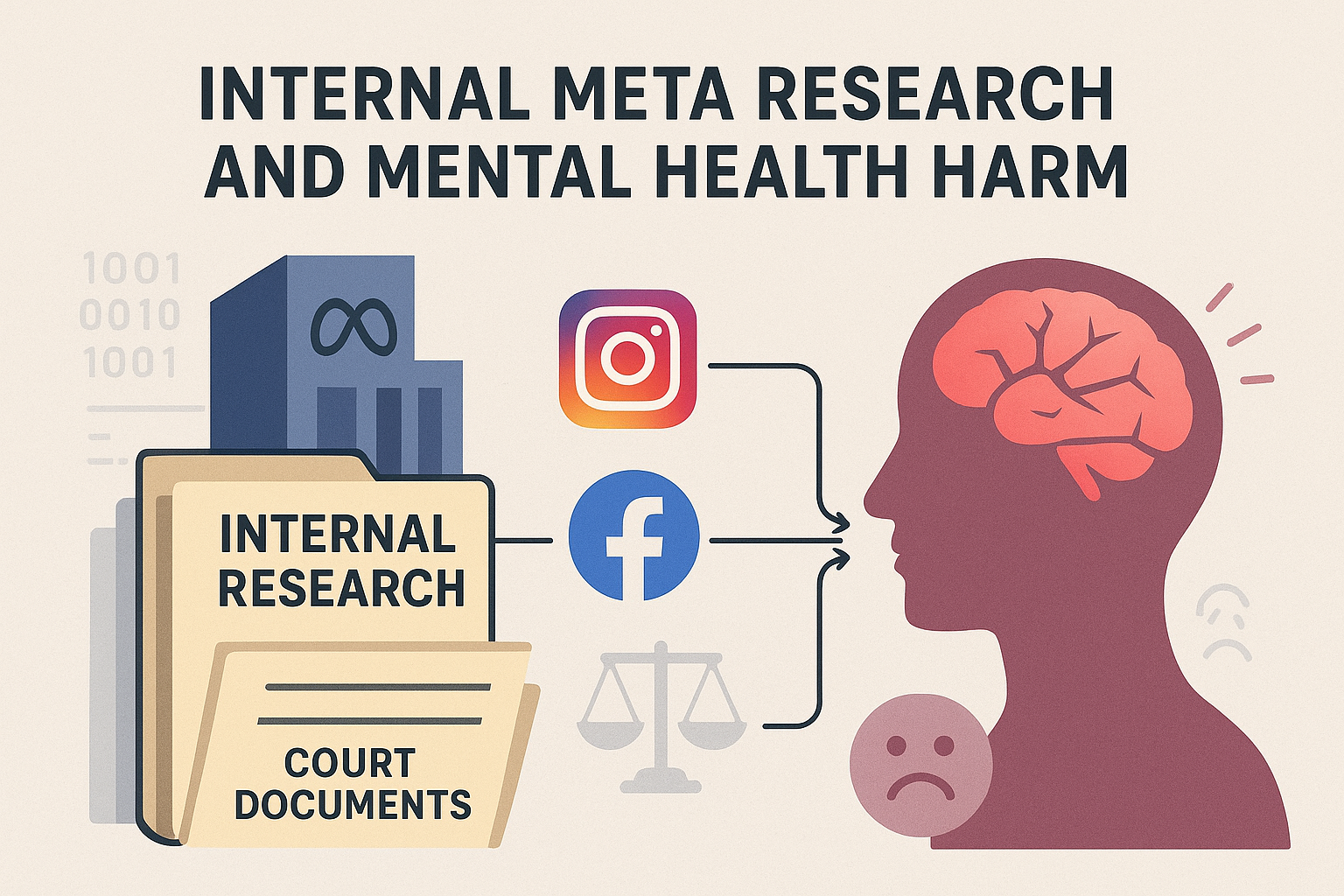
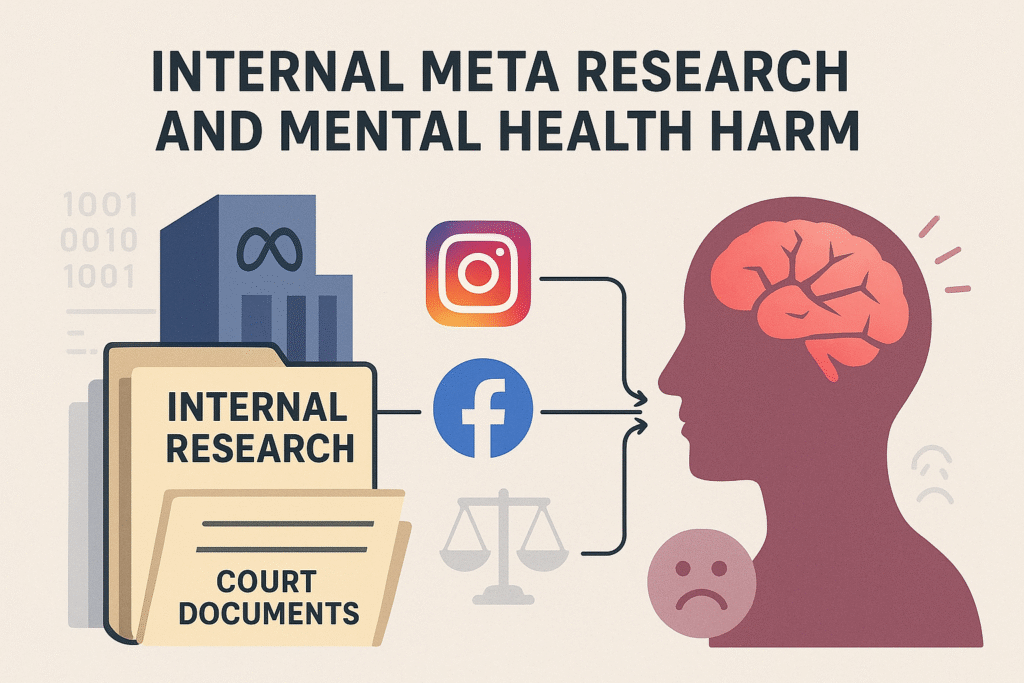
Newly unsealed legal filings in a massive lawsuit against social media giants allege that Meta executives knowingly suppressed internal research, dubbed “Project Mercury,” which provided causal evidence that deactivating Facebook led to significant improvements in user well-being, including reduced depression and anxiety.
- Meta Lawsuit
- Social Media Mental Health
- Project Mercury
- Facebook Depression
- Instagram Anxiety
- Teen Mental Health Crisis
- Social Media Addiction
In a development that could reshape the global conversation around social media and mental health, a US court has unsealed filings that paint a damning picture of corporate secrecy within Meta Platforms, Inc. The documents, part of a sprawling class-action lawsuit, allege that the company behind Facebook and Instagram obtained definitive, causal evidence of its products’ harm to user well-being and intentionally chose to bury the findings, halt further research, and publicly downplay the risks.
The case, brought by the law firm Motley Rice on behalf of hundreds of school districts across the United States, accuses Meta, along with Google (YouTube), TikTok, and Snapchat, of creating a youth mental health crisis through the design of their addictive platforms. While the suit targets multiple companies, the most severe and detailed allegations, supported by internal company communications, are levelled at Meta.
Project Mercury: The Study That Found a Smoking Gun
The core of the allegation against Meta revolves around an internal research initiative from 2020, code-named “Project Mercury.” According to the court filings, Meta scientists collaborated with the renowned survey firm Nielsen to conduct a rigorous study. The goal was to move beyond correlational data and establish a causal relationship between social media use and mental health.
The methodology was straightforward: Researchers measured the psychological state of users who deactivated their Facebook and Instagram accounts for a period of one week against a control group that continued using the platforms.
The results, as described in the internal Meta documents, were stark and, for the company, deeply unsettling. Participants who took a break from Facebook reported “lower feelings of depression, anxiety, loneliness, and social comparison.” This was not merely an observation; the study’s design was intended to show that stopping use directly caused these improvements in well-being.
An internal message from a Meta researcher to then-Head of Global Affairs, Nick Clegg, succinctly captured the finding: “The Nielsen study does show causal impact on social comparison,” accompanied by an unhappy face emoji.
Alleged Corporate Cover-Up: From Validation to Suppression
The court filings allege that instead of publishing these critical findings or using them to inform safer product design, Meta’s leadership moved to suppress them. Publicly, the company allegedly dismissed the “Project Mercury” results. Internally, they reportedly claimed the study was tainted by the “existing media narrative” around the company, suggesting that participants’ expectations, rather than the platform itself, skewed the results.
However, the unsealed documents suggest this public stance was at odds with private acknowledgments. Staffers reportedly assured Nick Clegg that the study’s conclusions were methodologically sound. The gravity of the situation was not lost on some employees. In a chilling comparison cited in the filing, one staffer expressed grave concern, writing that withholding such damaging internal research was akin to the “An internal memo revealed that a Meta employee drew a direct parallel to the tobacco industry, noting the similarity in knowing a product was harmful yet choosing to conceal that information.”
This allegation forms the basis for the plaintiffs’ claim that Meta engaged in a deliberate campaign of deception. Despite possessing internal causal data, the company reportedly told Congress it could not quantify whether its products were harmful to teenage girls—a statement the lawsuit frames as knowingly false.
A Pattern of “Designed Negligence” in Youth Safety
The allegations extend far beyond the suppression of a single study. The lawsuit outlines a systematic pattern where Meta executives allegedly prioritized user growth and engagement over the safety and well-being of its youngest users. The internal documents, as presented by the plaintiffs, claim:
Ineffective by Design: Meta intentionally designed its youth safety features to be hard to find and rarely used. The company allegedly blocked the testing of more robust safety tools out of fear that they would reduce user engagement and slow growth.
Dangerous Tolerance for Predators: In a particularly alarming claim, the filings state that Meta’s policy required a user to be caught 17 separate times attempting to traffic people for sex before being removed from the platform. An internal document reportedly described this as a “very, very, very high strike threshold.”
Profiting from Harmful Content: Meta leadership allegedly recognized that its algorithms, optimized for maximum teen engagement, inevitably served users more harmful and extreme content. The suit claims the company made a conscious decision to continue this practice.
Leadership Indifference: The lawsuit points to a 2021 text message from CEO Mark Zuckerberg himself, in which he reportedly stated that child safety was not his top concern, as he was more focused on other areas like “building the metaverse.” It is also alleged that he shot down or ignored requests from Nick Clegg to increase funding for child safety initiatives.
Broader Industry Allegations and Meta’s Defense
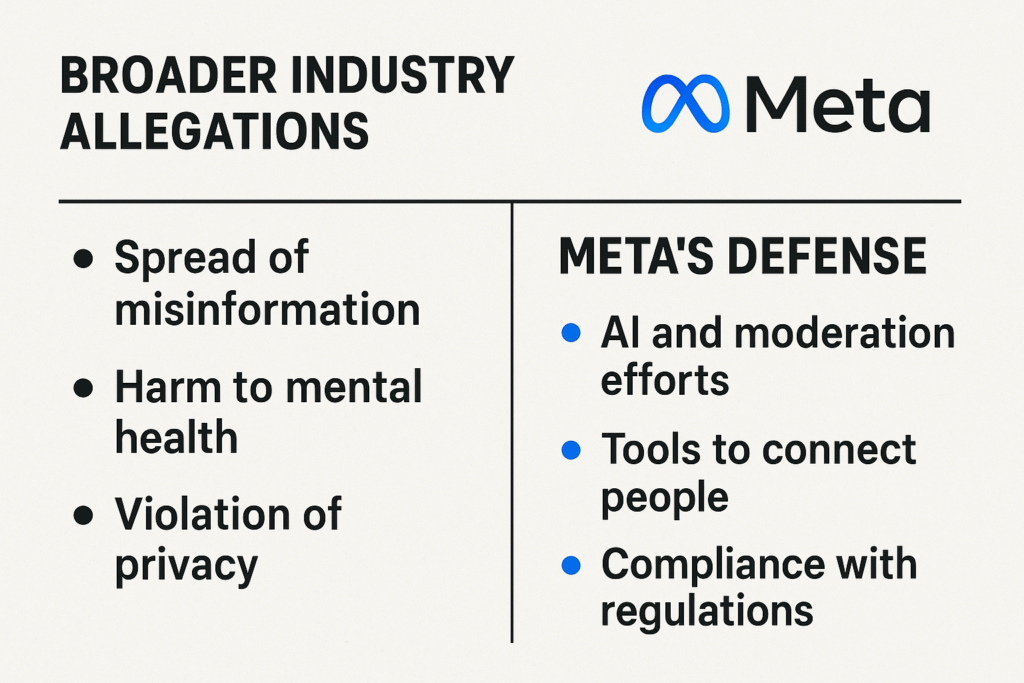
The lawsuit also makes claims against other platforms, though with less specific documentary evidence. It alleges that TikTok, Google, and Snapchat similarly concealed the risks of their products and engaged in marketing to children under 13. One notable allegation is that TikTok sponsored the National PTA and then internally boasted about its ability to influence the organization, with an official claiming the PTA would “do whatever we want.”
In response to the filings, Meta spokesman Andy Stone issued a vigorous denial. He stated that the “Project Mercury” study was halted due to flawed methodology and reaffirmed Meta’s commitment to teen safety. “The full record will show that for over a decade, we have listened to parents, researched issues that matter most, and made real changes to protect teens,” Stone said. He dismissed the plaintiffs’ claims as relying on “cherry-picked quotes and misinformed opinions,” and maintained that the company’s youth safety tools are “broadly effective.”
The Legal Road Ahead
The unsealing of these documents marks a critical juncture in the legal battle against Big Tech. Meta has filed a motion to strike the documents from the record, arguing that the plaintiffs are seeking to make public an overbroad set of internal communications. A hearing on the matter is scheduled for January 26 in a Northern California District Court.
The outcome of this case has the potential to force unprecedented transparency upon the social media industry. For parents, educators, and policymakers, the allegations confirm their worst fears: that the companies shaping modern childhood may have known about the profound harms of their products all along and chosen, in the pursuit of profit, to look the other way. The case is no longer just about whether social media is harmful, but whether its largest players deliberately concealed that harm—a legal and ethical charge that echoes some of the most consequential corporate accountability battles in history.